Showing posts with label Aqua Virgo. Show all posts

Wednesday, January 17, 2018

PORTICO OF VIPSANIA

PORTICUS VIPSANIA
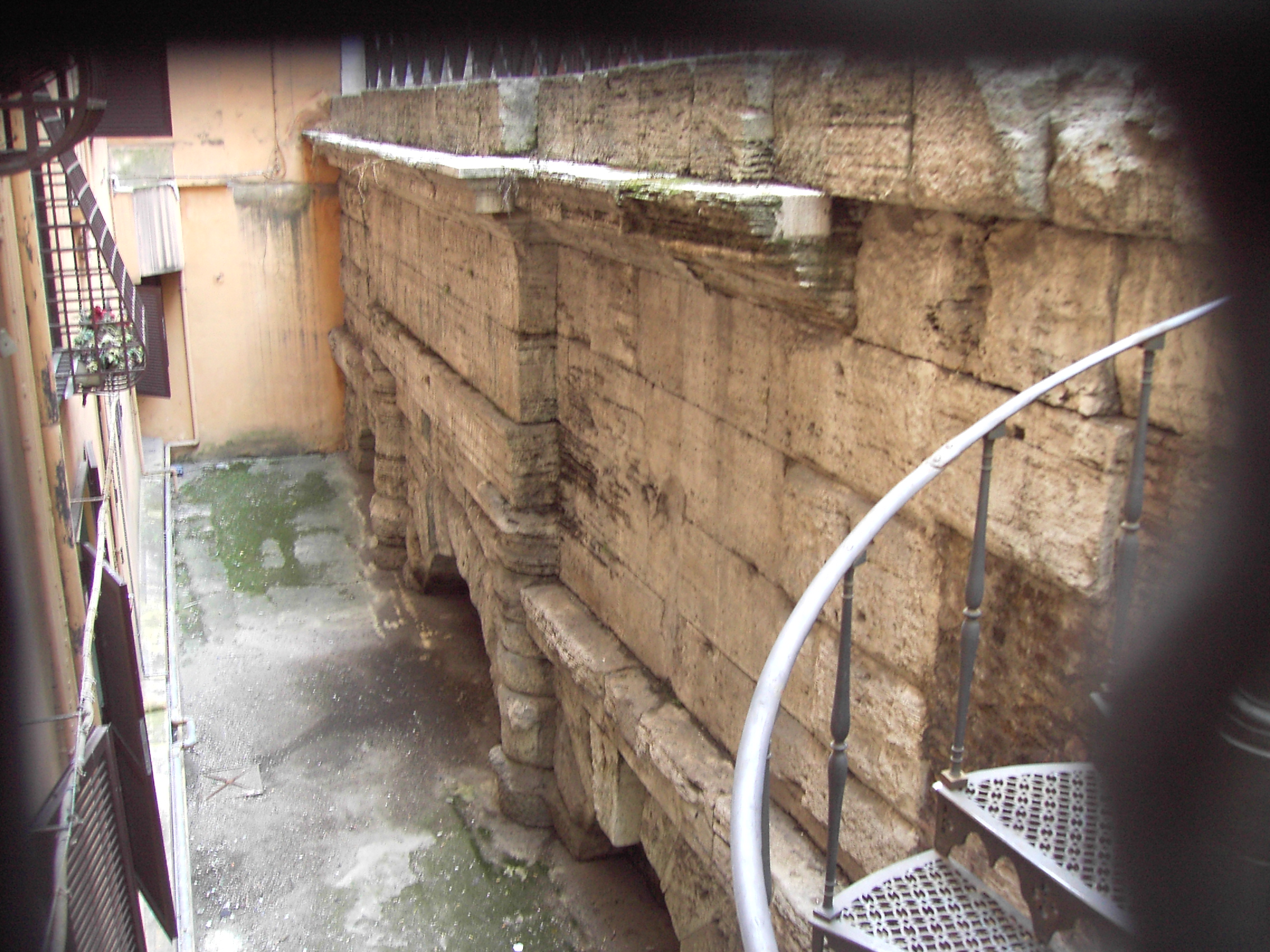
It stood on the right side going north of the ancient Via Lata (now Via del Corso) immediately south of the arches of the Aqua Virgo, in the area where the Galleria Sciarra is today
It was designed by Agrippa, begun by his sister Vipsania Polla, after whom it was named and finished by Augustus (27 BC/14 AD)
Agrippa had a great map of the empire (orbis pictus) exhibited in the building
It was adjacent to the CATABULUM (in the area where now is the church of S. Marcello) headquarters of the organization of public transport
It was maybe the CENTRAL OFFICE OF THE CURSUS PUBLICUS or the Imperial Post, which was used to cover in emergency up to 250 km (155 miles) per day (the normal average was 40 km - 25 miles - per day) using the stations for the exchange horses placed along the Roman roads
It is estimated that the Roman road network covered, in its entirety, about 80,000 km (50,000 miles), equivalent to about twice the circumference of the Earth

Wednesday, July 29, 2015

St. JAMES' HOSPITAL

OSPEDALE S. GIACOMO


Maybe 1339 with the legacy of Cardinal Pietro Colonna, as written on a plaque in the courtyard

It was also known as Ospedale S. Giacomo degli Incurabili (St. James' Hospital of the Incurables) with disarming lack of confidence in the health service of the time or Ospedale S. Giacomo in Augusta (St. James in Augusta Hospital) for its proximity to the Mausoleum of Augustus, which had been transformed into a fortress of the Colonna family

It was granted in 1515 by Leo X Medici (1513/21) to terminally ill patients with the exception of those with leprosy and plague

Most of the patients were syphilitic

Rebuilt 1519/49 by Giorgio da Coltre from a project by Antonio Cordini aka Antonio da Sangallo the Younger (1483/1546)

Of this ancient building remain the FAÇADE on Via Ripetta and a marble relief on a landing of the staircase with “Madonna” by Andrea Bregno (1418/1503)

Modified about 1584 by Francesco Capriani aka Francesco da Volterra (1535/94) who also designed the church of S. Giacomo in Augusta

Rebuilt again 1842/44 by Pietro Camporese the Younger (1792/1873)

In 1929 it was converted into a hospital emergency room and in 1950 the general hospital activity began again

In the years 2004/08 there was a very expensive complete renovation with purchase of modern medical technology, only to decide to close permanently the hospital in the same year 2008: a waste of public money for an impressively disgusting speculation by Italian corrupt politicians

A marble plaque near Via del Corso 494 recalls how this hospital has received continuously running water since 1572, coming from the Aqua Virgo roman aqueduct: it is definitely the oldest single user to have received water continuously in Rome, probably in the world

Friday, January 3, 2014

TREVI FOUNTAIN

FONTANA DI TREVI
1732/51 Nicola Salvi (1697/1751) for Clement XII Corsini (1730/40)
It was completed in the years 1751/62 by Giuseppe Pannini (about 1720/about 1810) (son of the painter Giovanni Paolo Pannini) after the death of Salvi in 1751
It is called "Trevi" maybe because it comes from an area formerly known as Trebium (country house) whose name has since disappeared or maybe because it is situated at the confluence of three roads (Trevio o Treio) the current Via Poli, Via Crociferi and Via delle Muratte
The water still comes from the AQUA VIRGO, the aqueduct built in 19 BC by Marcus Agrippa. The springs are at Salone, at the eighth mile of the Via Collatina towards Via Tiburtina, in the Ager Iucullanus between Rome and Tivoli
These springs are 20 km (12.4 miles) away and at a level of height above the fountain of just 6 meters (19 feet). There are no pumps, and water is driven only by force of gravity
It is the only one of the eleven ancient Roman aqueducts to have been always working with only short periods of closure
The aqueduct was restored by Hadrian I (772/795) and in 1453 by Leon Battista Alberti (1406/72) and Bernardo Rossellino (1409/64) for Pope Nicholas V Parentucelli (1447/55)
The great Renaissance architects embellished the old fountain located on the east side of the square (where now Via della Stamperia begins) in the style of their time
PROJECTS to modernize the fountain were entrusted to Giacomo della Porta (1533/1602), Gian Lorenzo Bernini (1598/1680) and Pietro Berrettini aka Pietro da Cortona (1597/1669), but they were never realized
The project by Bernini saw only the foundations completed and a basement. The Tomb of Cecilia Metella had been chosen by Urban VIII Barberini as the place from which building materials could have been taken to build the new fountain but fortunately the tomb was spared
Clement XI Albani (1700/21) restored the aqueduct in 1706, and Clement XII Corsini (1730/40) held a contest in 1732 which was won by Nicola Salvi out of 16 projects on display at the Quirinale Palace. The choice of Salvi was due to the insistence of Cardinal Neri Corsini, nephew of the pope, even though the Cement XII had also liked the project by Luigi Vanvitelli (1700/73)
It was inaugurated in 1744 by Benedict XIV Lambertini (1740/58), but it was only finally completed in 1762 for Clement XIII Rezzonico (1758/69) with all the sculptures
It occupies a whole façade of PALAZZO POLI formerly known as Palazzo Ceri
"It represents a perfect synthesis of architecture, sculpture and natural elements. The fundamental theme guiding the work of Salvi is the movement, the perpetual changing of things, of which water, by its very nature is a primary symbol. And the fountain is intensely animated in different parts: in the free-flowing and turbulent water flow, in the irregular shape of the cliff, in the groups of sculptures emerging from it. The magnificent architectural backdrop curtain is rooted in the cliff: Palladian in the lexicon, but rearranged in the articulation of its syntactic elements (see the crowning of the windows on the second order, which breaks the continuity of the cornice, or the free frieze in the attic) and vibrant in the chiaroscuro effect" (Carlo Bertelli, Giuliano Briganti, Antonio Giuliano)
"In the Trevi Fountain (...) the show of water finds its most complete and spectacular expression, from the blades of the central cylindrical cascade to the naturalistic configuration of the smaller bodies of water nested among the rocks, to the geometrical boundary of the basin, it is a continuous interplay of artifice and nature in which the travertine with its rough and chiaroscuro surfaces plays an important role as a mediator between marble's bright stillness and the vibrant race of the waters" (Paolo Portoghesi)
Group of "Ocean" on a shell chariot with "Two Mermen and two Winged Horses" executed at forst in stucco in 1741 by G.B. Maini (1690/1752) and later in marble in the years 1759/62 by Pietro Bracci (1700/73) who was given the task of finishing the work after the Maini's death
The two horses represent the sea respectively calm and rough and are provided with fins instead of hooves
"Bracci's Ocean a little frivolous, standing as a dancing teacher on a huge rockery shell is far from the spirit of the works of Bernini, as it is the picturesque character of the numerous rivulets, or the artificial union of conventional basins with natural rocks. However, the Trevi Fountain is the beautiful swan song of an era that owed all of his vital impulses to one great artist, Gian Lorenzo Bernini" (Rudolf Wittkower)
On the right "Health" 1759/62 and on the left "Wealth" 1759/62 by Filippo Della Valle (1698/1768)
"Very similar to the Temperance of the Corsini Chapel in San Giovanni in Laterano, even though they are a prelude to the incipient classicism for their greater simplicity and firmness of composition" (Carlo Bertelli, Giuliano Briganti, Antonio Giuliano)
RELIEFS:
On the right "Virgin indicating the location of the source to the Roman troops" by Andrea Bergondi (active in Rome XVIII century)
In the upper part FOUR ALLEGORICAL STATUES representing the seasons, carved in 1735, from left:
"Plenty of fruits" by Agostino Corsini (1688/1772)
"Fertility of fields" by Bernardino Ludovisi (about 1713/49)
"Gifts of Autumn" by Francesco Queirolo (1704/62) pupil of Antonio Corradini with whom worked in the amazing Cappella Sansevero in Naples
"Amenities of the meadows" by Bartolomeo Pincellotti (active since 1735/d. 1740) who also made the decoration of the cliff
CENTRAL INSCRIPTION with crest of Clement XII Corsini (1730/40) who commissioned the fountain and on the sides representations of "Fame" 1736 by Paolo Benaglia (?/1739)
The rococò elements of the fountain as the shell on which Ocean stands, for example, are entirely subordinate to a strong late baroque classic style that, despite the crowds and illegal vendors always present, never fails to fascinate and amaze
On the right of the fountain there is a large vase, known as "Asso di Coppe" (Ace of Cups), because it looks like one of the card of this suit. It is said to have been placed there by Salvi to prevent the sight of the fountain to a barber who was constantly criticizing his work from his shop
The tradition of throwing coins into the fountain hoping to return to Rome is perhaps connected with the Roman tradition disappeared at the end of 1800 of the fontanella degli amanti (little fountain of lovers): when a young man had to leave Rome he was accompanied by his girlfriend to the Trevi Fountain to make him drink the water with a new glass which, after the ceremony, was broken. This meant a wish for eternal love
The money being thrown into the water every year by tourists (in 2005 about € 900,000 were collected) is given to the Caritas diocesiana, a registered charity institution of the Vatican. They use it for charitable activities including a supermarket where homeless people can get food for free

Thursday, September 19, 2013

ARCHES ON THE VIA LATA

ARCHI SULLA VIA LATA
In ancient Rome there were about 40 triumphal arches of which at least three on the Via Lata. Thay are all gone now except for some fragments kept in various locations
It used to be where S. Maria in Via Lata is now
Built 303/304 for Diocletian (285/305) in the twentieth anniversary of his government
Whatever was left was demolished in 1491
Some of the surviving sculptures from the first century AD which had been reused by Diocletian are now embedded in the rear façade of the Villa Medici
In Piazza Sciarra after Via del Caravita
Built 51/52 for Claudius (41/54) who wanted to commemorate the conquest of Britain
The aqueduct Aqua Virgo used to run over the arch
It yielded a large fragment of the inscription now set out in the courtyard of the Palazzo dei Conservatori and other pieces of sculptures in the Palazzo Nuovo
Shortly before Via della Vite where an inscription commemorates the site. It was leaning against the Palazzo Fiano Almagià
Its dating is controversial. It was demolished in 1662
In early 1500 it was inhabited by Portuguese Cardinal George de Costa, who lived in an apartment above the arch
From the arch come two of the three reliefs of Hadrian now on the landings of the stairs in the Palazzo dei Conservatori part of the Capitoline Museums. They were certainly reused for the arch and maybe originally came from the arch at the entrance of the Temple of Hadrian, from which the third relief comes for sure

Wednesday, September 18, 2013

AQUEDUCTS

ACQUEDOTTI
There were eleven aqueducts in ancient Rome and, when there were nine at the time of Nerva (96/98), they supplied Rome with about 1,000,000 m³ of water per day, equivalent to 1 billion liters per day (265 million gallons): an average of about 1,000 liters (265 gallons) per head every day
It is a huge amount of water, considering that the people of Rome nowadays is provided with an average of about 500 liters each, half the amount
The total length of the aqueducts was 472 km (294 miles)
We have precise information on the first nine aqueducts from the book by the Curator Aquarum (Waters Minister) Frontinus, written in 97 AD
The four aqueducts of the Aniene Valley (Anio Vetus, Aqua Marcia, Aqua Claudia and Anio Novus) alone provided about 75% of the water
They were all cut in 537 AD by Vitige the king of the Goths. Many were built elsewhere in the empire: there was one in Tunisia in Cartagena from Mount Zaghoua all on arches for 80 km (50 miles)
The Romans were also builders of DAMS:
More than 100 were found for sure, especially localized in the southern empire including that of Proserpine in Spain 70 m wide (230 feet) 21 m high (69 feet) and 427 m long (1,400 feet), which is still used to supply water to Merida, or that of Homs in Syria 14 m wide (46 feet), 7 m high (23 feet) and 2,000 m long (6,560 feet)
312 BC Censor Appius Claudius Cieco the same one who had built the Appian Way
From the 8th mile of the Via Prenestina
16 km and 561 m (10 miles), the shortest, almost all underground
It used to provide half of the urban area with 73,000 m³ per day (19,285,000 gallons)
It entered Rome in the area known as Spes Vetus (Porta Maggiore), passed through the Celio, Aventino and ended in the Forum Boario
It has not been found, apart from a few urban sections made in blocks of tufa
272/269 BC Censors Manio Curio Dentato and Furio Flacco with the spoils of war after the victory over Pyrrhus in the years 280/275
From the Aniene River near Vicovaro
63 km and 640 m (39 miles)
175,920 m³ (46,500,000 gallons)
It entered Rome in the Spes Vetus, crossed the Esquiline and ended near where the Termini train station is today
During the imperial period the intensive urbanization of the area between Vicovaro and Mandela caused water pollution. From then on the water was only used for irrigation and fountains
144 BC Praetor Quintus Marcius Rex
From the valley of the Aniene River (Arsoli - Agosta)
91 km (57 miles) of which 80 (50 miles) underground, the longest one
187,600 m³ (49,500,000 gallons)
It entered Rome in the Spes Vetus, followed the route of the future Aurelian Walls at Porta Tiburtina and from there to Via Marsala. It ended near the present-day Ministry of Finance, and branched off in several areas, including the Capitol Hill
About 360 years later its branch Aqua Antoniniana (named after Caracalla, Marcus Aurelius Antoninus) provided water for the Baths of Caracalla (211/217), another branch was used for the Baths of Diocletian (284/305)
Restored by Hadrian I (772/795)
Pius IX Mastai-Ferretti (1846/78) had Luigi Canina (1795/1856) restoring it and opened the ACQUA PIA ANTICA MARCIA whose end is the Fontana delle Naiadi in Piazza della Repubblica
125 BC Censors Cneo Cepione Servilius and Lucius Cassius Longinus
From Tusculum east of Frascati
18 km (11 miles)
17,800 m³ (nearly 5 million gallons)
It entered Rome in the Spes Vetus and continued as the Aqua Marcia
The water was hot, hence the name tepula
33 BC Marcus Agrippa
From the source Squarciarelli (Tusculum) same area of the Aqua Tepula
21 km and 677 m (13 miles)
48,240 m³ (12,700,000 gallons)
It was merged in the same conduit of the Aqua Tepula 
19 BC Marcus Agrippa
Springs at Salone on the eighth mile of the Via Collatina towards Via Tiburtina, in the Ager Iucullanus between Rome and Tivoli
20 km (12.4 miles) all underground but the last two
Water pure and light with no limestone
100,160 m³ (26,500,000 gallons)
It used to enter Rome on the Pincio Hill, then on to the Spanish Steps and the Pantheon and it used to end in Largo di Torre Argentina at the Baths of Agrippa
It is the only one of the eleven ancient Roman aqueducts to have been always working with only short periods of closure
It was restored by Hadrian I (772/795)
In 1453 Niccolò V Parentucelli (1447/55) commissioned Leon Battista Alberti a new restoration of the aqueduct. It ended in the area known as Trejo with a small fountain, then replaced in 1762 by the current Trevi Fountain where the water is still brought today by this aqueduct which is nearly 2,000 years old
From the beginning to the end of the aqueduct there is a difference of just 6 meters (19 feet)
2 BC Augustus (27 BC/14 AD)
From the lakes of Bracciano and Martignano
33 km (20.5 miles) all underground
15,680 m³ (4,142,000 gallons) the smaller water flow
The water was not drinkable and probably served to feed the huge Naumachia of Augustus built in the year 2 BC (533 x 354 m - 1,750 x 1,161 feet: the stadium where the naval battles took place in the area stretching from today's Piazza Mastai and Piazza San Cosimato
The naval battles took place about 100 years later in another Naumachia built by Trajan in the area where today is Via Cola di Rienzo
Begun in 38 by Caligula (37/41) and completed in 52 by Claudius (41/54)
From the valley of the Aniene River, at the 38th mile of the Via Sublacense, from the springs Curzio and Ceruleo in the area Arsoli/Agosta
69 km (43 miles) of which 16 km (10 miles) above the ground, including the famous arches of 10,508 m (6.5 miles) in the Roman countryside
184,280 m³ (48,500,000 gallons)
It entered the Spes Vetus with the double arch of Porta Maggiore
Nero (54/68) built a branch (the so-called AQUEDUCT OF NERO) to the Celio Hill, as the Aqua Appia, and then had it finish at the Temple of Claudius
Domitian (81/96) took it to the Palatine Hill
Restored by Hadrian I (772/795) to provide the area of the Lateran
It is the most monumental with arches of 17/22 m (55/72 feet) of average height. In the Quadraro area they are as high as 27.40 m (90 feet)
Begun in 38 by Caligula (37/41) and completed in 52 by Claudius (41/54)
From the Aniene River near Subiaco
87 km (54 miles)
189,520 m³ (50,000,000 gallons) the biggest water flow and the highest arches near Capannelle
It came to the pool known as Piscina Liminaria located in the Capannelle area: from there went to the terminal Spes Vetus, relying on the arches of the Aqua Claudia
The water was taken directly from the river, so it often came to Rome rather murky, particularly after long rains. In order to eliminate the inconvenience, Trajan (98/117) had to move the spot for the collection, drawing more water not from the river but from a clear lake that was by Treba Augusta, modern Trevi in the Lazio region
109 by Trajan (98/117)
From near Lake Bracciano
32 km and 500 m (21 miles)
It entered the Janiculum from Porta S. Pancrazio feeding the mills in Trastevere and the baths of Trajan
It was reopened by Paul V Borghese (1605/21) who built an arch of travertine, known as ARCO DI TIRADIAVOLI (Arch of throw devils) to span Via Aurelia almost at Porta S. Pancrazio
The engraving on the arch reads AB· AVG· CAES· EXTRUCTOS (built by the Emperor Augustus) proof that the pope and his architects evidently believed, wrongly, that they had restored the Aqua Alsietina, actually built by Augustus for his naumachia or naval stadium, and not the Aqua Traiana
The same error is present in the inscription of the FOUNTAIN OF THE ACQUA PAOLA where the aqueduct ends
226 Alexander Severus (222/235)
From near Colonna, opposite to Gabii
It follows the Via Prenestina. Brick arches, an element powerful and light at the same time, which allows for a straighter route
22 km (14 miles). Cut by the Lombards in 775 and re-opened by Adrian I (772/795)
Restored in 1589 by Sixtus V Peretti (1585/90) and called as his first name ACQUEDOTTO FELICE, "Felix or Happy Aqueduct". It is visible now in Tor Tre Teste and it ends with the Fountain of Moses
Built originally by Matteo Bartolani da Città di Castello (about 1527/about 1598), who made a wrong project (the aqueduct sloped towards the source and not towards Rome) and was replaced by Giovanni Fontana (1540/1614), brother of Domenico and expert in hydraulics, who completed it in two years
For the construction he used some materials of the Aqua Claudia and the arches of the Aqua Marcia, so this persuaded Pope Sixtus V in the mistaken belief that he had brought the Aqua Marcia and the Aqua Appia back to Rome