Saturday, August 25, 2018

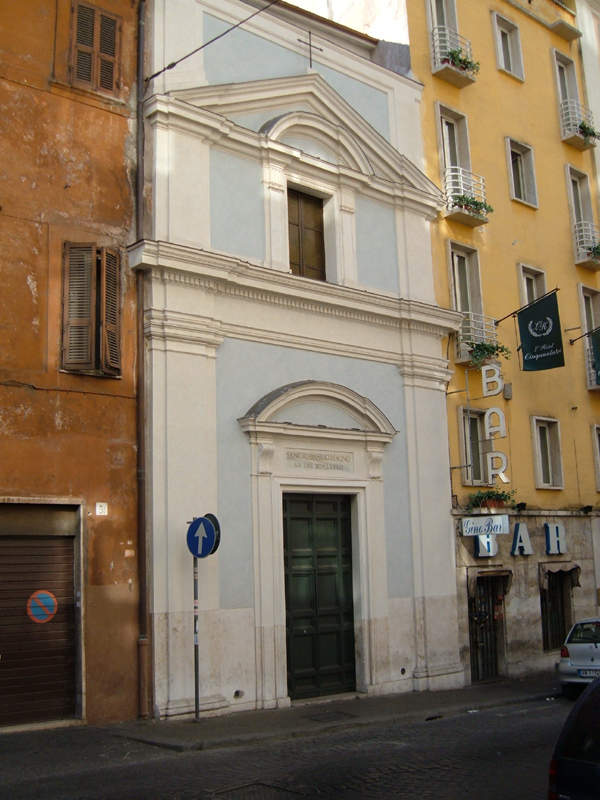
St. BENEDICT IN PISCINULA


S. BENEDETTO IN PISCINULA
It is mentioned in the sources for the first time at the end of the tenth century
It was built incorporating the cell of St. Benedict (about 480/547), where the saint lived in the years 495/500
The cell according to tradition was part of the DOMUS ANICIORUM, or the home of his family, the Anici
The ancient document Liber Censuum of 1198 describes the church as “De Piscina” (of the pool) probably because of the proximity of some ancient thermal pools
BELL TOWER and ORATORIO to the left of the vestibule were built between the twelfth and the thirteenth century

The bell tower is the smallest in Rome and it includes the oldest bell in a tower in the world, dating from 1069, and the smallest one as well, with only 45 cm (17.7 inches) in diameter
This little bell has even found place in the Guinness Book of World Records for being, in fact, the oldest bell tower known, although some scholars date it to the fourteenth century
In the years 1676 and 1718 there were changes to the church

1844 renovations and FAÇADE by Pietro Camporese the Younger (1792/1873)
VESTIBULE maybe the original nucleus of the place of worship:
On the left CHAPEL OF OUR LADY
On the right CELL OF St. BENEDICT
Remains of the Cosmatesque FLOOR dating back to the twelfth or thirteenth century enhanced after the 2007 restoration
COUNTER FAÇADE AND RIGHT WALL
Fragments of frescoes “Last Judgment, Sacrifice of Cain and Abel, and maybe Expulsion from Paradise” by an unknown artists of the beginning of the twelfth century

“To judge these frescoes is difficult because of the poor state they are in, but the decorations seem to be part of the Roman and Lazio region painting style of the late eleventh and early twelfth century - like in S. Clemente or Ceri - an observation not denied by what one can imagine from the treatment of physiognomies. Guiglia also included these frescoes in the iconographic period that has its roots in the group of the Atlantic Bibles - so-called Umbrian-Roman - for which a close comparison can still be the cycle in Ceri” (Serena Romano)

TO THE RIGHT OF THE APSE
Altarpiece “St. Anne, Madonna and Child with the patron”
MAIN ALTAR
“St. Benedict” all works of the fifteenth century
Fragment of a fresco in the apse with festoons

St. BENEDICT


S. BENEDETTO
1936 Clemente Busiri Vici (1887/1965)
Only the outer walls remained standing after the bombing of the Allied Forces on March 3, 1944
It was rebuilt in 1949 and completed inside in 1953
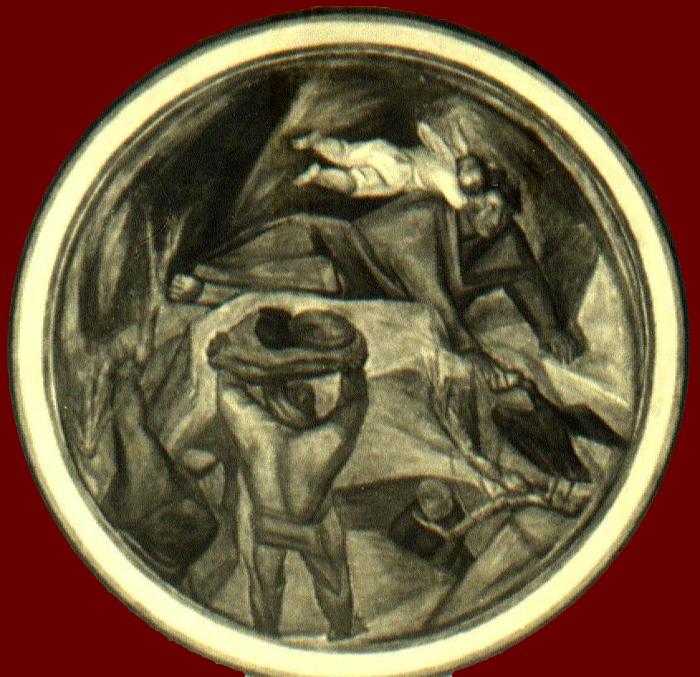
In the ceiling round panels “Stories of St. Benedict” by Ferruccio Ferrazzi (1891/1978)
“After a debut inspired by Segantini and a temporary, partial adherence to Futurism, he followed the neo-classicism of the Novecento (Twentyeth-Century) current, albeit mitigated with accents of Pre-Raphaelite origin. He thoroughly studied encaustic technique and he used it, especially in wall paintings” (Enciclopedia Treccani)
In the CHAPELS two paintings:
“Madonna and Child” 1951 by Silvio Consadori (1909/94)
 ”St. Joseph with Jesus teenager” 1953 by Luigi Filocamo (1906/88)
MAIN ALTAR
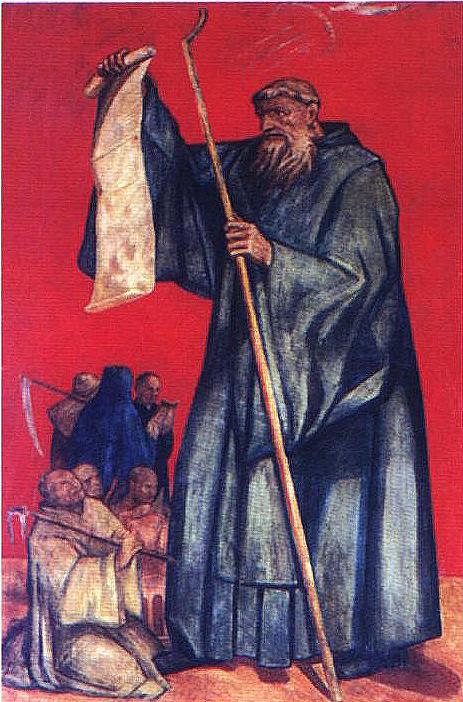
Canvas “St. Benedict” by Ferruccio Ferrazzi

Thursday, May 24, 2018

St. BASIL THE GREAT


S. BASILIO
Built in the years 1680/82
Expanded with the convent in 1692 by Francesco Carlo Bizzaccheri (1655/1721)
In 1874 the monastery became the property of the Italian State
It is dedicated to St. Basil who lived in Turkey between 329 and 379. He defended orthodoxy against the Arian heresy
 It is part of the Italo-Greek Catholic Church depending on the Abbey of Grottaferrata
It is a peculiar Catholic church that uses the Byzantine Rite. It is autonomous and its members are concentrated in Southern Italy and Sicily

NAVE
Paintings by anonymous artists of the seventeenth century:
On the right “Death of S. Joseph” and on the left “Virgin Mary and Child with Saints” where there is the representation of S. Nile offers the model of the Abbey of Grottaferrata, still run by the Basilian Monks
“Memory of Cardinal Basilios Bessarion (1403/72)”

“He contributed to the diffusion in Italy of the study of the Greek language and especially of the Platonic philosophy, and in defense of Plato (...) he wrote (...) against Thomistic Aristotelianism. (...) He translated into Latin the Metaphysics by Aristotle. He left letters, prayers, theological essays, rich in doctrine, supported by great balance of thought. He strove with great fervor, with writings and words, with extensive and skillful diplomacy, for a crusade to win back Constantinople, fallen into the hands of the Turks in 1453. In 1463 the alliance of Venice with Pope Pius II, obtained by Bessarion, seemed to make the crusade possible, but the death of the pope (1464) brought Bessarion to move away from the Curia and to continue alone diplomatic relations in Europe. His rich library of Greek manuscripts, donated to Venice (1468), was the first and most important collection of the Biblioteca Marciana” (Enciclopedia Treccani)

Huge “Iconostasis” of the end of 1800s from the church S. Lorenzolo ai Monti destroyed for the opening of Via dei Fori Imperiali
In all the churches with Italo-Greek Catholic rite the presbytery reserved for the clergy is separated from the rest of the church with a large iconostasis or barrier of dark wood adorned with sacred images
MAIN ALTAR
Canvas “St. Basil” by an anonymous artist of the seventeenth-century