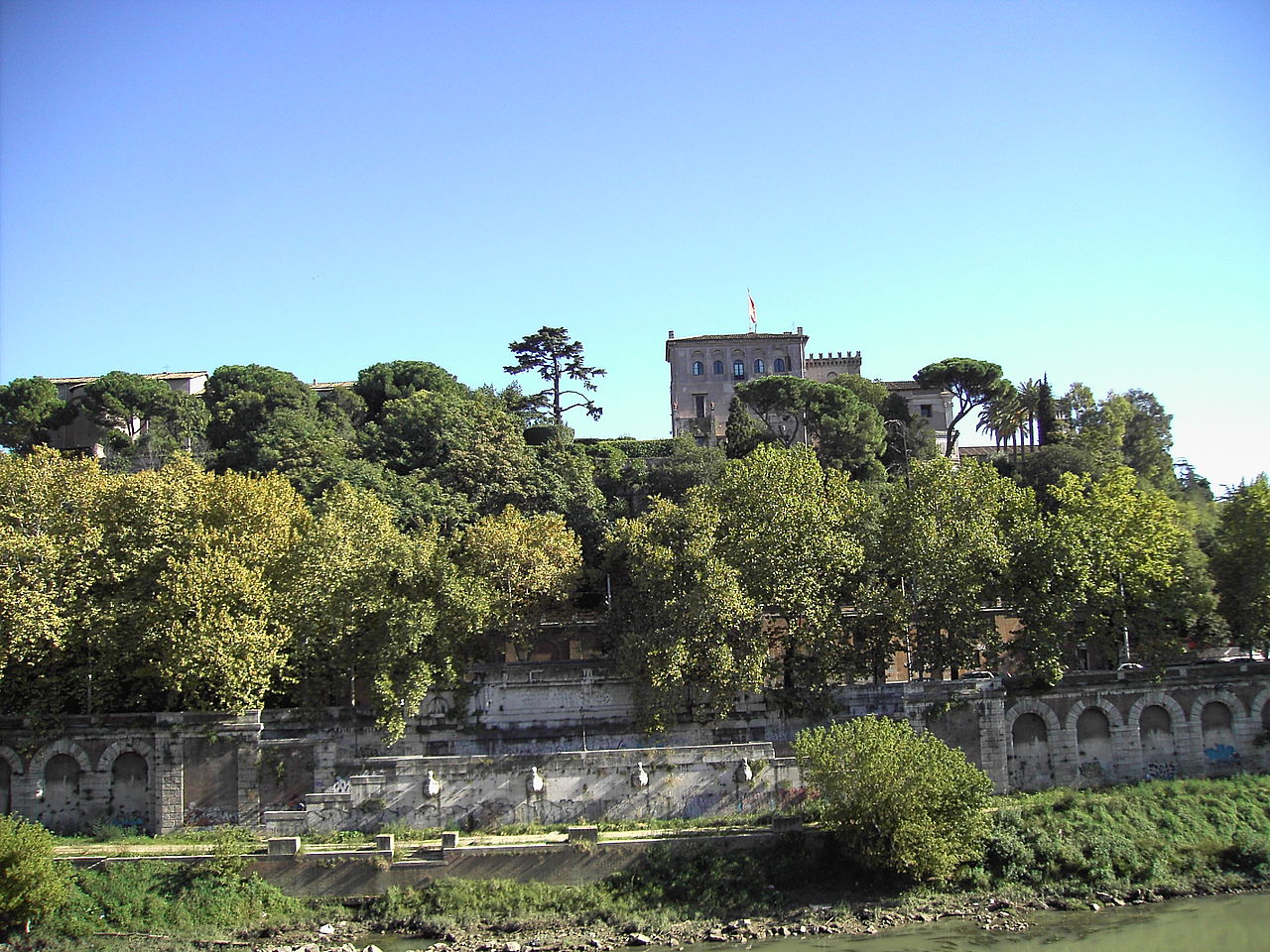
AVENTINO
Southernmost hill of Rome, which originally had maybe the name of Mons Murcus and whose history has always been closely linked with that of the plebs, the lower social classes
According to tradition it was populated by the inhabitants of Ficana, Tellenae, Medullia and Politorium, cities that were conquered and destroyed by Anco Marcio the fourth legendary king of Rome
In 456 BC the Lex Icilia de Aventino Publicando handed it to the commoners so that they could build homes, after an earlier occupation by the patricians, which had triggered riots
Later it became a merchant district for the vicinity of the River Tiber, mainly frequented by foreigners. It was located outside the pomerium, the boundary of the sacred city of Rome (it came to be considered inside the pomerium only at the time of Claudius AD 41/54), although the Servian Wall encircled it since the sixth century BC
During the imperial period it became an aristocratic neighborhood and the poorest people moved to the plain further south where the Testaccio neighborhood is now
Among the houses known to be here there were those of the emperor Vitellius (69), of Licinius Sura and of his friend Trajan (98/117) before he became emperor
The neighborhood was severely damaged by the sack of Alaric in 410
Near the Parco degli Aranci there is a wall built at the beginning of 1200 last remains of the SAVELLI FORTRESS maybe built for Honorius III Savelli (1216/27): it was a medieval castle that was the property of the Savelli family for a long time
Under S. Prisca there is a MITHRAEUM with remarkable frescoes
AD 252 for Decius (249/251)
Restored under Constantius II (337/361) and in 414 after the sack of Alaric
The main building was 70 x 35 m (230 x 115 feet)
We know the plant from a drawing done by Andrea Palladio (1508/80)
They were built over older buildings from the period of Trajan and Hadrian; many rooms of these older buildings are kept up to the vault, some with decoration of the end the second century AD in the first style, one of the few examples in Rome. Maybe they were houses that used to belong to Decius over which he decided to erect his baths
Belonging to Licinius Sura, a friend of Trajan in the area west of S. Prisca under the current dance school
A fragment of the Severan marble plan of Rome, the Forma Urbis, identifies a republican temple (periptero sine postico) located to the west of the baths, maybededicated to the Moon, Consus or Vertumnus
Temples of plebeian character often tied to business functions:
CERES
CONSUS
LUNA
LIBERO e LIBERA, dedicated by Spurius Cassius in 493 BC
FLORA, on the Clivus Publicus, just like the temples of Cerere e Libero e Libera
MERCURIUS 495 BC, protector of merchants at the opposite end of the Circus Maximus
VENUS OSSEQUENTE, 295 BC
VENUS VERTICORDIA
LIBERTAS e IUPPITER LIBER, maybe two different names for the same temple
Temples of which we know the exact location:
DIANA, Greek type temple periptero ottastilo built by Servius Tullius (578/534) near S. Sabina maybe taking as a model the Temple of Artemis at Ephesus. It was rebuilt in 36 BC by Lucius Cornicius.
MINERVA, probably third century BC, north of the Temple of Diana
JUNO REGINA, under S. Sabina
JUPITER DOLICHENUS, in Via S. Domenico east of S. Sabina, personification of a deity from the city of Dolico in Anatolia, nowadays Turkey
Hittite origin, he was venerated as a god of fertility and lightning. He was identified as Ahura Mazda of the Zoroastrian religion
The cult was imported to Rome by the legions returning from war with the Mithraic religion spreading in Italy between the second and the third century AD. Just like Mithra, Jupiter Dolichenus was a mystery cult: it was believed that the god would propitiate success and safety of the military organization
The god was represented with an ax and a thunderbolt in hand