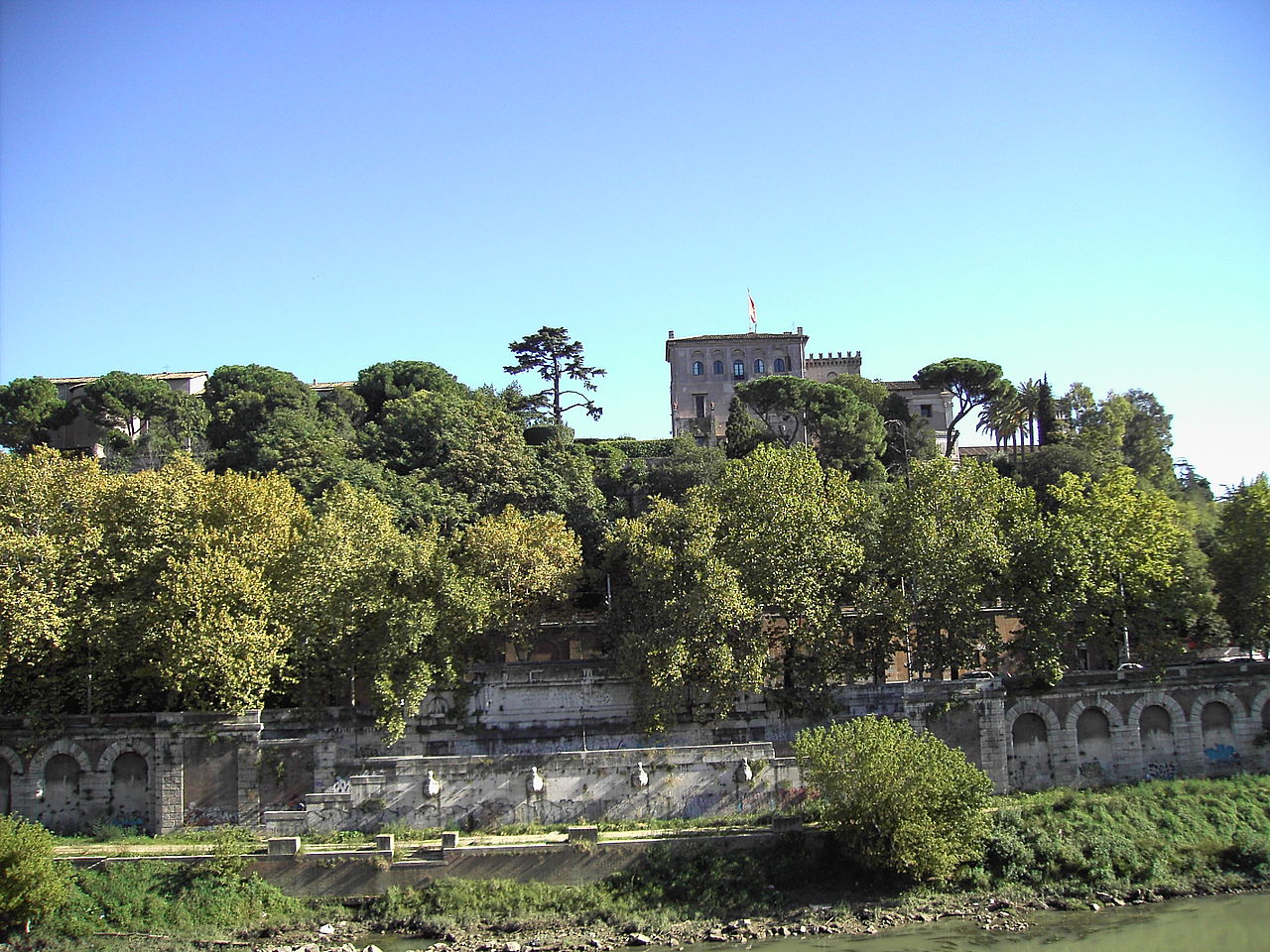
Piazza S. Saba/Piazza Gian Lorenzo Bernini 20
645, monastery dedicated to St. Sabbas (439/532), head of Eastern monasticism, founded by monks from the monastery of St. Sabbas in Judea, which had been occupied by the Muslims
It was built over ancient Roman structures, maybe the barracks of the IV Coorte dei Vigili (Fourth Cohort of the Firefighters Brigade)
According to tradition, this eventually became the site of the house of St. Silvia, mother of St. Gregory the Great (590/604)
The monks of the monastery, under the auspices of the popes, became promoters of a significant diplomatic activity and became a veritable link between East and West
In the year 768 here was imprisoned the antipope Constantine II. His eyes were gouged out, his tongue cut out, and then he was killed on the orders of Pope Stephen III (768/772)
Second phase of construction of the church in the eighth century
The PRESENT CHURCH was built in the first half of the twelfth century
The MONASTERY was assigned in the thirteenth century to the Monks of Cluny, then to the Regular Canons, to the Cistercians and finally was entrusted by Pope Gregory XIII Boncompagni (1572/85) to the Hungarian German College run by the Jesuits
Restoration in the years 1932/33, after years of decline
The body of St. Sabbas was returned to the hermitage of St. Sabbas in Palestine after the Second Vatican Council
PROTHYRUM
Remodeled in the thirteenth century
PORCH WITH GALLERY AND LOGGIA
1463 for Cardinal Francesco Piccolomini, restored in the late eighteenth century by Pius VI Braschi (1775/99)
Ancient and medieval archaeological remains including:
Ancient “Fluted sarcophagus with dextrarum iunctio”
Relief with “Knight with falcon” of the eighth century
PORTAL
Marble frame 1205 by Jacopo di Lorenzo di Cosma (first half of the thirteenth century)
The paintings in the upper part were executed on the occasion of the Jubilee of 1575
FLOOR
1205 Jacopo di Lorenzo di Cosma. It was restored in 1907
14 COLUMNS TAKEN FROM ANCIENT ROMAN BUILDINGS
CIBORIUM, ALTAR AND CHAIR
Rebuilt at the beginning of the twentieth century with ancient pieces
APSE
Frescos “Christ between Sts. Andrew and Sabbas”, below “Mystic Lamb and lambs in lines”, “Virgin Mary and Child with the twelve apostles”, further below “Gregory XIII and saints canonized during the Jubilee of 1575” by anonymous painters of the late sixteenth century who perhaps remade in fresco the decoration that was previously in mosaic
Above the chair “Crucifixion” of the fourteenth century
FOURTH AISLE
On the left frescos “The Legend of St. Nicholas of Bari and the three spinsters”, “Pope enthroned between two saints”, “Virgin Mary between Sts. Andrew and Sabbas” end of 1200s/beginning of 1300s by the Master of St. Sabbas
CORRIDOR IN FRONT OF THE SACRISTY
Fragments of votive panels including “Faces of three monks” of the twelfth century
ARCHAEOLOGICAL EXPLORATIONS
In 1900 the remains of the so-called Oratory of St. Silvia were found under the church, including a small chapel in the north-west corner with remains of frescoes from the first half of the tenth century:
“Three panels with the anagram signing of one Sergius Pictor, another painted inscription with enigmatic meaning and the representation of one Martinus Monachus Magister”
“The perimeter walls of the ancient church are preserved today only to a height of about a meter and a half, having been reused as stylobates of the colonnades of the medieval church. The rest of the building was demolished and obliterated by the new constructions. Certain portions of masonry and a large number of fragments of painted plaster returned to light during the excavations, as they had been used in the foundation fill of the church, over which was laid the cosmatesque floor of the new foundation. The building, according to my reconstruction, starting from the late fourth-early fifth century was affected by seven decorative campaigns, identified on the basis of the mapping and analysis of the stratigraphy of the painted plaster” (Giulia Bordi - Opera · Nomina · Historiae 1-2009 - Journal of the artistic culture of the Scuola Normale Superiore in Pisa)