Showing posts with label Via del Babuino. Show all posts

Thursday, January 16, 2020

TALKING STATUES

STATUE PARLANTI

Also known as Congresso degli Arguti (Congress of the Smart People)

Common people used to hung on these statues messages known as pasquinate (lampoons), from Pasquino, the statue that started the tradition, a sort of today's “blog” that gave voice to the opposition to the regime

Abate Luigi

Abbot Luigi
Piazza Vidoni

“Man wearing a Toga” of the late Imperial period moved to Piazza Vidoni after the demolitions for the opening of Corso Vittorio Emanuele II

Babuino

Baboon
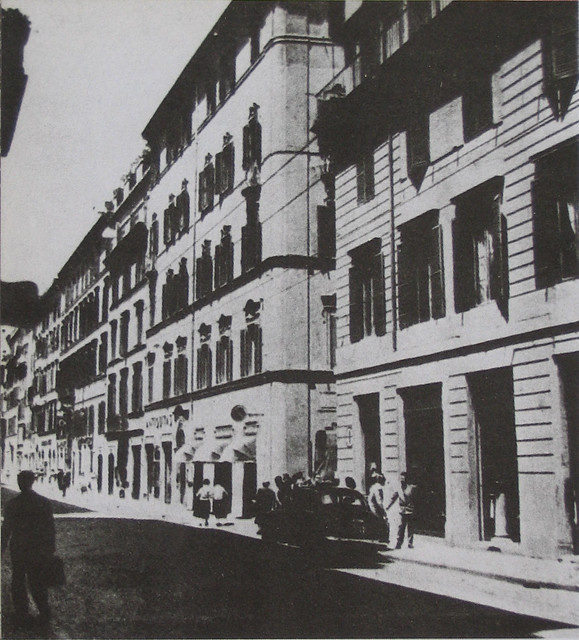
Via del Babuino 51

“Silenus” (or maybe the Sabine god Fidio Sanco) placed in 1576 on Via del Babuino (which took its name from the statue) at No. 51 for Pope Gregory XIII Boncompagni (1572/85)

Set in a rustic setting in 1738 for the Boncompagni Ludovisi family
In 1878 it was removed but it was reinstated in 1957
It was so famous that the “lampoons” hung here were called “babuinate”

Facchino

Porter
Via del Corso 307

“Water carrier with barrel” on the left side of Palazzo De Carolis
It dates from the time of Gregory XIII Boncompagni (1572/85), although it is erroneously attributed to Michelangelo by popular tradition

Madama Lucrezia

Madame Lucretia
Piazza S. Marco

The name may come from Lucrezia d'Alagno, friend of Alfonso of Aragon and Paul II Barbo (1464/71) who commissioned the nearby Palazzo Venezia
It's actually a giant statue of “Goddess Isis” found in the Isei Campensis, the ancient temple dedicated to Isis and placed in Piazza Venezia in about 1500 by the Cardinal Lorenzo Cybo

Marforio

Piazza del Campidoglio

Colossal reclining statue of “Ocean” of the first century AD found in the Forum and now in the courtyard of the Palazzo Nuovo of the Capitoline Museums

Pasquino

Piazza di Paquino

Maybe “Menelaus with the body of Patroclus” or “Ajax with the body of Achilles” Roman copy from the original of about 200 BC found on Via del Parione in 1501
It was perhaps part of the decoration of the Stadium of Domitian, and it was placed in Piazza Pasquino by Cardinal Oliviero Carafa

It took its name from that of a judgmental and talker tailor who lived nearby and who had recently died
It is the only one of the talking statues that continues to speak today

Among the many lampoons, whose authors were authoritative intellectuals, there was the one on the occasion of the excommunication by Pope Innocent X Pamphili (1644/55) for anyone who had smoked tobacco, a novelty recently imported from the New World, in the Basilica of St. Peter

“On the neck of the famous statue was hung a sign with Latin verses saying: 'You exercise your power against a leaf blown away by the wind and you pursue a dry straw’. The pope wanted to know the author, and Pasquino 'said': 'Job, 13, 24'; it was indeed verses from the Holy Scriptures. Even the pope promised a prize to the author, but since some time before the person responsable for a reckless lampoon against the sister of Pope Sixtus V had a bad end, this time the author was careful not to be discovered and made Pasquino answer : 'Free of charge. Don’t worry about it…’'“ (Italo De Tuddo)

Thursday, May 17, 2018

St. ATHANASIUS OF THE GREEKS


S. ATANASIO DEI GRECI
1580/81 Giacomo Della Porta (1533/1602) for Gregory XIII Boncompagni (1572/85) who established the Congregation of the Greeks for the communities that followed the Greek-Albanian rite in Southern Italy
It was consecrated only in 1583 and the decoration was completed only in 1591
The trichora plant (rectangular room with apses on three sides) follows the byzantine schemes
Greek Catholic Church officiated with the Byzantine rite in Greek
FAÇADE
Maybe completed by Martino Longhi the Elder (1534/91)
With its two towers echoes the nearby and almost contemporary church SS. Trinità dei Monti
CHAPEL ON THE RIGHT
Altarpiece “Annunciation” about 1583 by Francesco Traballesi (active second half of the sixteenth century)
On the left “Tomb of the priest Demetrius Falereo” d. 1664 with the painting “Head of Christ between two executioners” of the sixteenth century by an unknown artist of the German school, improbably attributed to Albrecht Dürer (1471/1528)
APSE ON THE RIGHT
Altarpiece “Assumption and Coronation of the Virgin Mary” began in 1585 and ended only in 1591, maybe early work by Giuseppe Cesari aka Cavalier d'Arpino (1568/1640)
In a glass case there is the mechanism of the clock tower dating back to 1710. The clock is externally facing the Greek College
MAIN ALTAR
Great “Iconostasis in wood” 1876 by Andrea Busiri Vici (1818/1911)
It replaced the original iconostasis painted by Traballesi whose fragments are now kept in the refectory of the Collegio Greco
APSE ON THE LEFT
“Crucifixion with Mary and St. John” by Giuseppe Cesari aka Cavalier d'Arpino
CHAPEL ON THE LEFT
Altarpiece “Jesus among the doctors” by Francesco Traballesi (active second half of the sixteenth century)
COLLEGIO GRECO (Greek College)
To the left of the church
1796 Carlo Puri De Marchis

Tuesday, September 29, 2015

RAFFAELLI SMALL PALACE

PALAZZETTO RAFFAELLI


1826 Giuseppe Valadier (1762/1839) for Giacomo Raffaelli, advisor to the Russian Czar in the Papal States, who opened in the palace a mosaic workshop

Interesting intermediate solution between the type of the palace and of the bourgeois home
In 1871 one extra floor was added

Sunday, February 9, 2014

HOTEL DE RUSSIE

HOTEL DE RUSSIE 
1818 Giuseppe Valadier (1762/1839) for the Torlonia family that settled an inn called "delle Russie" (Russia's)
Converted into a hotel 1872 by Raffaele Canevari (1828/1900) as "Hotel of Russia and of the British Isles", which was changed in 1892 in "Hotel de Russie"
It became the elite meeting place in Rome at the time of King Humbert I (1878/1900) and Gabriele D'Annunzio
After the Second World War it was occupied by homeless people
Restored in 1954 by the Vaselli family who had bought it
The hotel closed in 1969 and housed the headquarters of the Directorate General of RAI (the public national television company)
In 1999 it was again opened as a hotel for the company Albergo di Russia and Sir Rocco Forte & Family SPA

Tuesday, November 19, 2013

ALL SAINTS CHURCH

CHIESA EVANGELICA INGLESE DI OGNISSANTI
1882/87. It was a project of George Edmund Street (1824/81) executed after his death by Pio Barucci and Vincenzo Cannizzaro with a bell tower disrespectful of the original design
Good example of gothic revival
Mosaics in the apse Edward Coley Burne-Jones (1833/98)
Ceramic tiled plinth by William Morris (1834/96)
George Edmund Street was teacher of Morris and Burne-Jones, celebrated exponents of the English Pre-Raphaelite movement
Heads in bronze and marble of members of the Roman imperial family of the first century were found in its foundation. They are now in the Centrale Montemartini Museum in Rome and in Baltimore