Showing posts with label Gaetano Koch. Show all posts

Friday, December 22, 2017

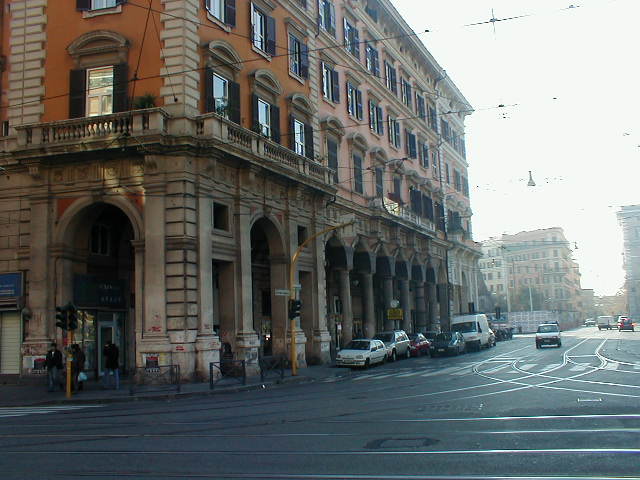
VICTOR EMMANUEL II SQUARE

PIAZZA VITTORIO EMANUELE II
Residential buildings with porches 1881/86 Gaetano Koch (1849/1910) and Giulio Podesti (1857/1909)
It is the largest square in Rome 316 x 174 m (1037 x 571 feet)
Built on the site of the destroyed Villa Palombara
Group of sculptures in concrete “Glauco” 1900 by Mario Rutelli (1859/1943) first version of the Fountain of the Naiads in Piazza della Repubblica
In the center of the square there are the ruins of a huge fountain of the time of Alexander Severus (222/235) known as TROFEI DI MARIO (Mario's Trophies)
On the east side of the square were destroyed the remains of a circular mausoleum called CASA TONDA (Round House), maybe the Tomb of Maecenas, beside which the sources mention the Tomb of Horace

Monday, September 18, 2017

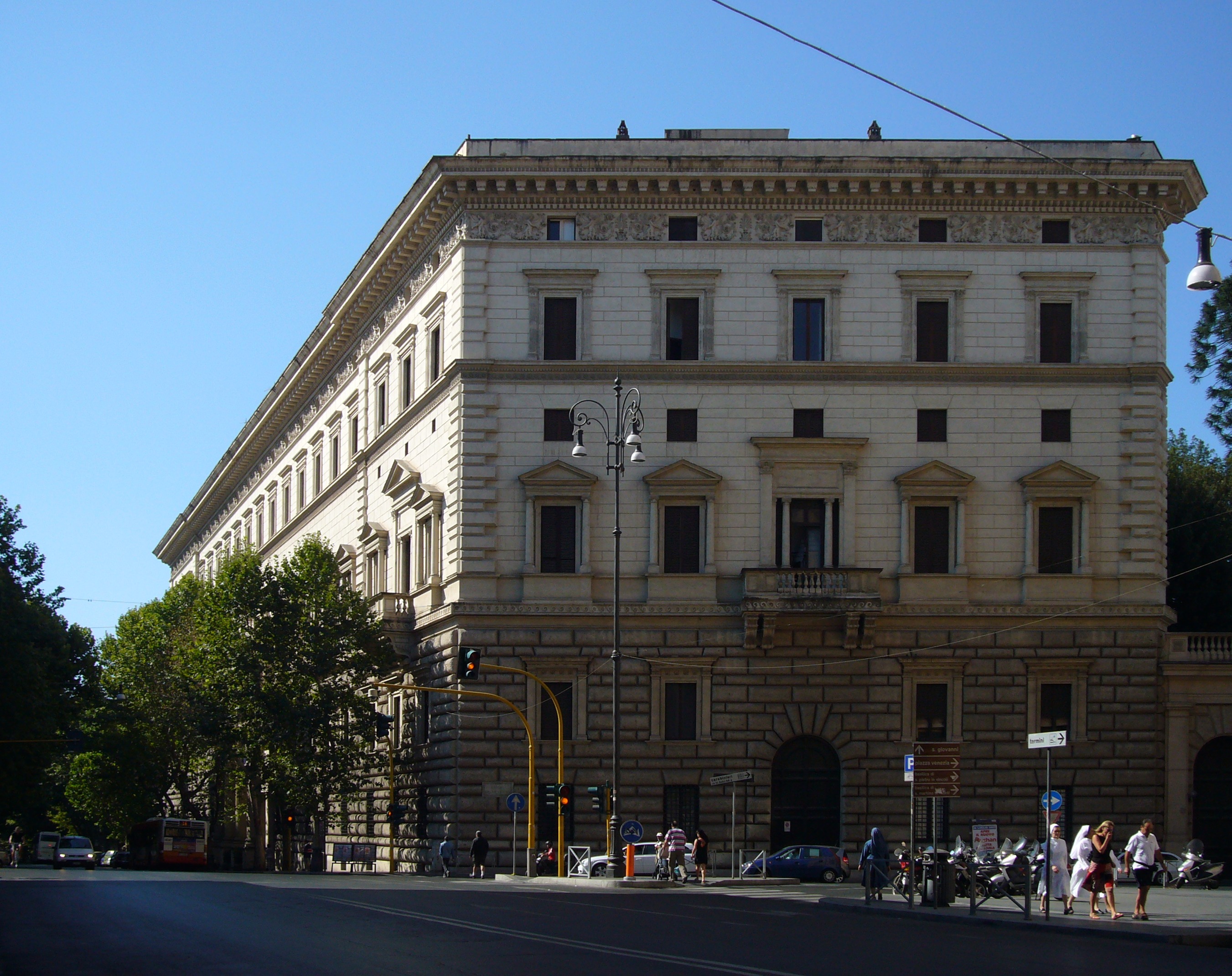
RUFFO GUGLIELMI PALACE

PALAZZO RUFFO GUGLIELMI
It was built in the sixteenth century for the Cybo family
It later belonged to the Altemps and to the Ruffo families who had in 1783 Kaiser Wilhelm II of Austria as their guest here
It then passed to the Guglielmi family of Vulci who did renovation in 1873 with Gaetano Koch (1849/1910)
It has been the headquarters of the Italian Democratic Party

Wednesday, July 5, 2017

MENGARINI ALBERTINI PALACE

PALAZZO MENGARINI ALBERTINI
End of 1800s by Gaetano Koch (1849/1910) for Senator Mengarini
Since 1915, it was property of Senator Luigi Albertini, editor of the newspaper Corriere della Sera, one of the main lobbyists for the Italian intervention in World War I, and since 1941, after his death, of his daughter Elena, married to Count Nicolò Carandini
After World War II the building then took the name of PALAZZO CARANDINI
The prestigious place in which it stands and the incomparable view are such that in the fifties the Agnelli family (founders and directors of FIAT cars) decide to use the building as their residence in Rome
Modern myth has it that two floors of the building were won during a card game between the lawyer Gianni Agnelli and Count Nicolò Carandini
Another rumor still more insistent wants that the building has been favored by the Agnelli because its height exceeds that of the Torrino del Quirinale, as if to symbolize the role played by the Agnelli family as substitute of the House of Savoy after the war

Wednesday, March 22, 2017

ARMY PALACE

PALAZZO ESERCITO
1875/89 as MINISTRY OF WAR
Today it is the headquarters of the ARMY STAFF AND THE GENERAL SECRETARIAT OF DEFENSE
Large MILITARY CENTRAL LIBRARY with books mainly of military subjects
More than 120,000 volumes and 1,000 journals both Italian and foreign as well as about 1,200 antique books
In the basement is partially preserved the BUNKER where on the night between 8 and 9 September 1943 general Pietro Badoglio and members of the Italian royal family came from the nearby Palazzo del Quirinale to escape the chaos that followed the armistice between the Italian government and the Allied Forces
On the other side of Via XX Settembre there are four palaces built during the same period:
PALAZZO BOURBON 1884 at No. 3 and PALAZZO CALABRESI 1882 at No. 5 by Gaetano Koch (1849/1910)
PALAZZO BARACCHINI 1886 at No. 8 and PALAZZO CAPRARA 1884 at No. 11 by Giulio Podesti (1857/1909)

Wednesday, December 7, 2016

PALACE OF THE BANK OF ITALY

PALAZZO DELLA BANCA D'ITALIA
1887/1892 Gaetano Koch (1849/1910)
Offices of the senior management of the bank, some departments of the central administration and “Paolo Baffi” library
ROOM OF THE COUNCIL
Frescoes by Giulio Bargellini (1896/1936)
Museo della Moneta
Museum of Coins
Selection of about 40 tablets of Mesopotamian origin. Studies of these tablets proved that from the third millennium BC silver and gold were used as means of payment, measure of value and store of wealth
About 800 coins in gold, silver, copper and alloy from the ancient Greek period to modern times, including “Silver Stater of King Croesus” 561/546 BC
450 notes and paper documents
ODDO COLLECTION with over 3,800 pieces of gold, silver, copper and alloy from emissions of southern Italy and Sicily referring to the period from the fall of the Western Roman Empire to modern age

Friday, March 25, 2016

BRANCACCIO PALACE

PALAZZO BRANCACCIO

Begun in the years 1879/83 by Gaetano Koch (1849/1910) for Mary Elisabeth Field Princess Brancaccio renovating existing structures consisting of church, convent, orchard and garden of the Franciscan Sisters of St. Clare Mary of the Purification in the Monti neighborhood
1886/90 last and most impressive work by Luca Carimini (1830/90) completed, after his death, in the years 1893/1922 by Carlo Sacconi and Rodolfo Buti
The interiors were designed and furbished in the years 1909/12 by Francesco Gai (1835/1917) with new architectural details, paintings, a nympheum and a coffee-house in the garden
“Gai was an uninhibited decorator, who knew eclectically how to combine the rigor of the classical tradition of the sixteenth and seventeenth century with the unrefined taste of the owners, often undecided between the already dated atmosphere of Paris during the Second Empire, the neo-rococo more Austro-German than French, the temptation for the pagination and refinement of the late Piedmontese Baroque and finally the splendor of the Tuscan and Roman Baroque” (Official website of the museum - www.museorientale.beniculturali.it)
The palace includes the TEATRO BRANCACCIO (Brancaccio Theatre) 1913/16 by Carlo Sacconi
Seat of the Istituto Italiano per l'Africa e l'Oriente (Italian Institute for Africa and the East) with a library of about 53,000 books and the

MUSEO NAZIONALE D’ARTE ORIENTALE “GIUSEPPE TUCCI”

National Museum of Oriental Art 'Giuseppe Tucci'
The most important of its kind in Italy. It opened in 1958
It has been dedicated since 2005 to Giuseppe Tucci (1894/1984) one of the greatest scholars of Eastern Art of the twentieth century
It houses objects found by Italian archaeological expeditions in Iran, Pakistan and Afghanistan, as well as items purchased by Giuseppe Tucci in Nepal and Tibet
FIFTEEN ROOMS WITH SIX SECTIONS
Ancient Near and Middle East (2 and 3)
The ancient civilizations of the Mediterranean, the Iranian plateau and Central Asia are represented by ceramics, bronzes, precious metals and semiprecious stones dating from the sixth millennium BC to the seventh century AD
Sculpture “Queen of Palmyra” third century AD from Syria
Tibetan and Nepalese (4)
Paintings on cloth, metal alloy statues, ritual and everyday use objects, jewelry and furniture parts, from twelfth through nineteenth century
“Polychrome Golden Cup Mina'i” with Iranian knight about twelfth/thirteenth century
Gandhara Art (5 and 8)
The works, mostly from the excavations of the Italian Archaeological Expedition in Pakistan depict scenes from the life and history of previous lives of the Buddha, first/fourth centuries AD
“Maitreya seated in the lotus position” about second/fourth century from Pakistan (formerly Gandhara)
Islamic (1, 6 and 10)
Metals, glass and especially ceramics from Iran, from the early Islamic period to the Qajar (eight/nineteenth centuries) and artifacts from the palace of Mas'ud III at Ghazni in Afghanistan (twelfth century)
Indian (9)
Sculptures from different parts of the Indian subcontinent, which are mainly Brahmanical deities of the pantheon, such as Shiva and Vishnu and images of Buddha and Bodhisattvas dating from the eight to the eighteenth century AD
Southeast Asia, China and Japan (7 and from 11 to 15)
Rich collection of about 4,000 pieces dating from the third millennium BC to the end of the nineteenth century AD shown in rotation
It includes Neolithic vases, archaic ritual vessels, figurines of Buddha and bronze mirrors, paintings, prints, textiles, as well as glazed ceramics and porcelain
“Guanyin” about twelfth century, Chinese sculpture carved in wood with traces of gold
ACTIVITIES OF THE MUSEUM
Photographic archives, specialized library, restoration workshop, archive of the eastern collections in Italy, service of bio-archaeology and electronic microscopy

Friday, March 11, 2016

BENNICELLI SPADA PALACE

PALAZZO BENNICELLI SPADA

Designed in 1660 by Francesco Borromini (1599/1667) for Monsignor Virginio Spada, Commander of the Bank of St. Spirit
He would have liked the palace to become the headquarters of the bank against the advice of the board of the bank
At his death in 1667 the Spada family was forced to buy the palace and the old Palazzo della Zecca (Palace of the Mint) by Antonio da Sangallo the Younger was chosen as the headquarters of the bank instead
Transformed and raised in late 1800s by Gaetano Koch (1849/1910) for the Bennicelli Counts
Traces of the seventeenth-century Borromini's work remain only in the courtyard
Count Adriano Bennicelli (1860/1925) was a very popular character in Rome at the time of king Humbert I and was nicknamed Conte Tacchia
“Tacchia” in Roman dialect is a piece of wood and the nickname refers to the activity of the Bennicelli family who had become rich by trading in timber. He was a very peculiar kind of person, famous for the contrast between his elegant appearance and his very vulgar attitudes

Wednesday, October 7, 2015

EXEDRA PALACES

PALAZZI DELL'ESEDRA


1886/1903 Gaetano Koch (1849/1910)

So called for the ancient series of porticoes with seats constituting the exedra of the ancient Baths of Diocletian built in the years 298/306

The palaces were built following the circular line of the baths’ exedra

Inside it is possible to see remnants of mosaic, a bathtub and an octagonal fountain

Gaetano Koch himself lived here and now the palaces house offices and the luxury hotel BOSCOLO EXEDRA after modifications designed by the architect Maurizio Papiri and the designer Adam D. Tihany

“The Exedra Palaces, the most significant mark left by Koch in the city, are one of symbolic urban hubs of the Third Rome. Constructed on the ruins of the exedra of the Baths of Diocletian, the buildings have a curved arch form in serial succession - Giant Order - attic executed purely in Roman style, while in the four short ends, with more pronounced plastic character, style and decorative elements (caryatids, curvilinear gables) are concentrated to denote the ease of the designer in making inroads in different historical periods” (Fabrizio Di Marco - Dizionario Biografico degli Italiani Treccani)

Cardboard drawn in preparation for “Geography” 1934/36 by Mario Sironi (1885/1961), part of the mosaic “Corporate Italy” exhibited at the Universal Exposition in Paris in 1937 and now in Milan in the Palazzo dei Giornali (Palace of Newspapers)

Tuesday, February 18, 2014

HOTEL TIZIANO

HOTEL TIZIANO
1886/88 Gaetano Koch (1849/1910) for the Marquis Francesco Saverio Lavaggi. Formerly known as Palazzo Lavaggi Pacelli belonging to the family of Pius XII Pacelli (1939/58)
It was converted into a hotel in 1956
The linear façade clearly inspired by the architecture of Antonio da Sangallo the Younger contrasts with the contemporary façade of the nearby Palazzo Vidoni by Francesco Settimj (active 1875/88) which is much more densely built. Both were built at the time of the opening of Corso Vittorio Emanuele II

Thursday, February 13, 2014

HOTEL PACE HELVEZIA

HOTEL PACE HELVEZIA
1873/74 Gaetano Koch (1849/1910)
"After 1972, when Koch received his title of architect and engineer, he began a feverish and untiring designer's work, carried out without interruption for three decades, as a 'smooth professionalism with no concerns' (Miano), based on a rigorous compositional use of sixteenth-century repertoire combined with the continued development of the typical features and distribution of buildings, with well thought solutions in the arrangement of courtyards and vertical connections" (F. Di Marco - Dizionario Biografico degli Italiani Treccani)

Tuesday, February 11, 2014

HOTEL MAJESTIC

HOTEL MAJESTIC
1889/96 Gaetano Koch (1849/1910)
It was the first hotel to be built on Via Veneto with the name of HOTEL DES SUISSE
It was the headquarters of the Canadian Armed Forces after the World War Two
In the vault of the main hall and on the first floor frescoes painted in distemper "Allegory of the glorification of Rome and the House of Savoy" 1900 by Domenico Bruschi (1840/1910)
Among the distinguished guests: Frank Sinatra (he wanted 5,000 basil plants on the terrace because he used to get up at three in the morning with the desire for fresh pesto), Take That, Duran Duran, Madonna, Michael Jackson and Tina Turner