Showing posts with label Cesare Valle. Show all posts

Tuesday, January 14, 2020

OLYMPIC STADIUM

STADIO OLIMPICO
Via dello Stadio Olimpico

In the years 1928/32 Enrico Del Debbio (1891/1973) prepared the project with the name of Stadio dei Cipressi (Stadium of the Cypresses) for mass demonstrations

In 1937 Angelo Frisa and Achille Pintonello (1902/?) took up the design but the stadium was never finished

In 1952 Annibale Vitellozzi (1902/90), Carlo Roccatelli and Cesare Valle (1902/2000) designed it again on the basis of the Stadium of the Cypresses and finally built it

It is used for athletics and football
Currently the capacity is 72,698 seats
It was restructured in 1990 with the addition of the roof

Tuesday, December 26, 2017

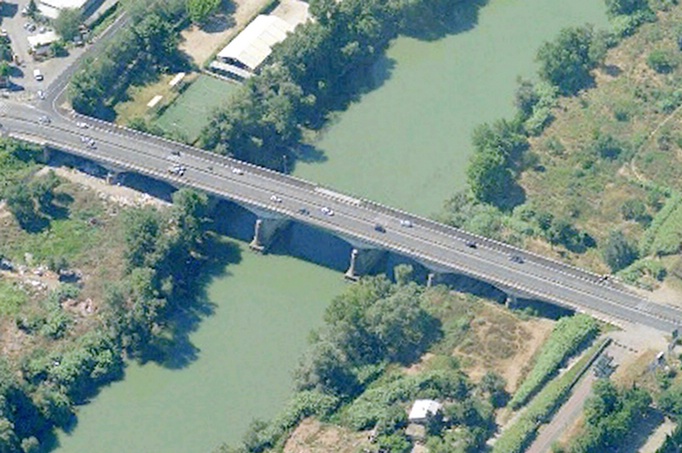
MAGLIANA BRIDGE

PONTE DELLA MAGLIANA
1930/48 designed by Romolo Raffaelli
It was swept away by a flood of the Tiber in 1937 when it still had not been completed
Bombed and damaged in 1943 by the Germans during the Battle of Magliana
Bombed and destroyed by the Americans in 1944
Rebuilt in 1948 200 m away by Ignazio Guidi (1904/78), Cesare Valle (1902/2000) and Carlo Cestelli Guidi for the Allegri firm without the previous fascist decorations
It is 224 m long (735 feet) and is made up of seven arches in reinforced concrete and travertine. The central bay can be opened and it is made of steel

Friday, December 2, 2016

PALACE OF THE NATIONAL INSTITUTE FOR MATERNITY AND INFANCY

PALAZZO DELL'OPERA NAZIONALE MATERNITÀ E INFANZIA
1939 Cesare Valle (1902/2000)
“Determined talent for architecture, teaching vocation, natural predisposition towards urban issues, but mainly invincible involvement in the programs, in the urgency to solve problems: the story of Cesare Valle is magnetized between these different options” (Website the Ministry of Heritage and Culture - Portal Architects - www.architetti.san.beniculturali.it)

Friday, November 11, 2016

PALACE OF THE REGISTRY OFFICE

PALAZZO DELL'ANAGRAFE
1936/37 Cesare Valle (1902/2000) and Ignazio Guidi (1904/78)
It is the area of the ancient PORTO TIBERINO (Tiberine Port) the first port of Rome
In order to build it, the Church of St. Galla was destroyed, as well as other buildings
“The project is characterized by a clear floor plan, in which the realization of the great courtyards, the highlighting of the substantial archaeological findings, the use of the curtain brick and travertine moldings and the large openings in iron glass summarize the choices that Guidi adopted for the setting of the buildings in an area unique in the world. The result is a great respect for the preexisting archaeological findings, without renouncing the use of elements of modernity that do not clash with the prestigious surroundings” (Filippo Spaini - Dizionario Biografico degli Italiani Treccani)
Inside the palace there is the large mural “Roman Carnival” 1937/39 by Orfeo Tamburi (1910/94)

Monday, November 7, 2016

ACEA PALACE

PALAZZO DELL'ACEA
1960 Cesare Valle (1902/2000) and Ignazio Guidi (1904/78)
ACEA is a public company that is responsible for the management of water and energy services
“Ignazio Guidi was in constant contact with fellow architects and engineers of his generation, with whom he formed design teams for competitions, and participated in the fervent cultural debate of the time, which led to the slow but steady emergence of modern architecture and the contemporary defeat of neoclassical and academic positions, who had many followers in Rome” (Filippo Spaini - Dizionario Biografico degli Italiani Treccani)
Fountain in front of the palace 1962 by Ludovico Quaroni (1911/87)

Wednesday, February 19, 2014

HOUSE FOR RENTAL ON LUNGOTEVERE MARZIO

CASA D'AFFITTO SU LUNGOTEVERE MARZIO
1932 Cesare Valle (1902/2000)
Also known as CASA VIOLA (Purple House)
Built after the Development Plan for Rome of 1931 had provided for the enlargement of the roads along the Tiber River at Ponte Cavour with the demolition of some old buildings 
Six floors with twelve apartments of four rooms each 
"The building, although built at the edge of the old town, rejects any mimetic attitude and instead assumes a particular character of formal elegance that comes from a certain attention both to the rationalist vocabulary and to some experiences of the 'Novecento' (twentieth century) style" (Piero Ostilio Rossi)

Tuesday, October 22, 2013

HOUSE OF THE ALA COOPERATIVE

CASA DELLA COOPERATIVA ALA
1932/33 BUILDINGS A and B, 1937 BUILDINGS Ba and C by Cesare Valle (1902/2000)
Decorations under the central windows Bruno La Padula and Ernesto Puppo
The building, in where the architect Cesare Della Valle himself used to live, was the scene of two murders that remained unsolved: the homicide of Renata Moscatelli, a wealthy elderly woman, in 1984 and the famous murder of Via Poma of the young secretary Simonetta Cesaroni in 1990