Showing posts with label Ponti di Roma. Show all posts

Saturday, January 6, 2018

SIXTUS BRIDGE

PONTE SISTO
Part of an arch is ancient: maybe part of the Bridge of Agrippa, built before 12 BC, or of the AURELIUS or “ANTONINUS” BRIDGE built in 147 AD for Antoninus Pius (138/161) or Caracalla (211/217), who was actually called Marco Aurelius Antoninus
It was restored in the years 366/367 by the prefect Lucius Aurelius Avianus Symmachus under Valentinian (364/375 with Valens and Gratian) and called the Bridge of Valentinian until 589 when a flood of the River Tiber destroyed it
Since then it was called tremulous BRIDGE, BROKEN BRIDGE or GIANICOLENSE BRIDGE
It was rebuilt in 1473/75 maybe by Baccio Pontelli (about 1450/92) for Sixtus IV Della Rovere (1471/84). He incorporated the ruins of the ancient bridge in the new construction and used materials taken from the Colosseum
The bridge was financed with money from the taxes levied on the “public whores” or prostitutes under the control of the church
One of the pillars was restored in 1567 by Matteo Bartolani da Città di Castello (about 1527/about 1598) for Pius IV Medici (1559/65)
In 1998 the parapets were rebuilt according to the original design and the damaged metal walkways added in 1877 were removed
It is 108 m (354 feet) long and 11 m (36 feet) wide
It seems that Sixtus IV had decided to build the bridge because when he was still a cardinal he had lived in the Convent of S. Salvatore in Onda in Via dei Pettinari and so he knew well how the construction of the new bridge would have facilitated communications in this area of ​​Rome
It is the only bridge in Rome constructed between antiquity and the nineteenth century

Thursday, January 4, 2018

SALARIA BRIDGE

PONTE SALARIO
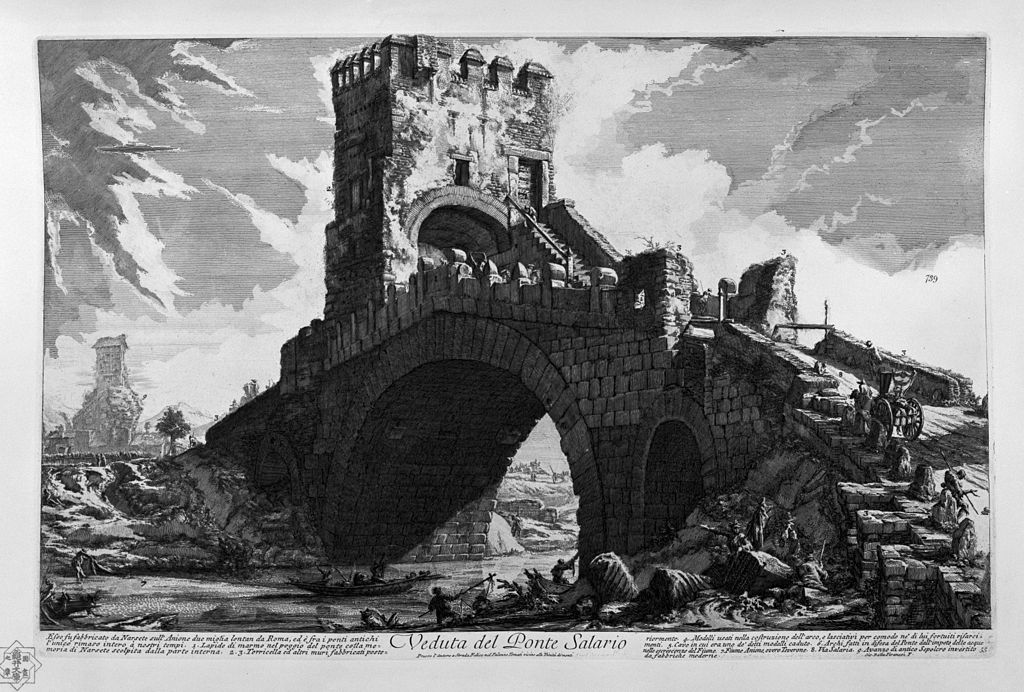
Built in the Republican period so that the VIA SALARIA could pass the ANIENE RIVER
The original bridge was constructed by the Etruscans who used the Via Salaria to take salt from the salt marshes near the mouth of the Tiber to the Sabina region
It was destroyed and rebuilt several times
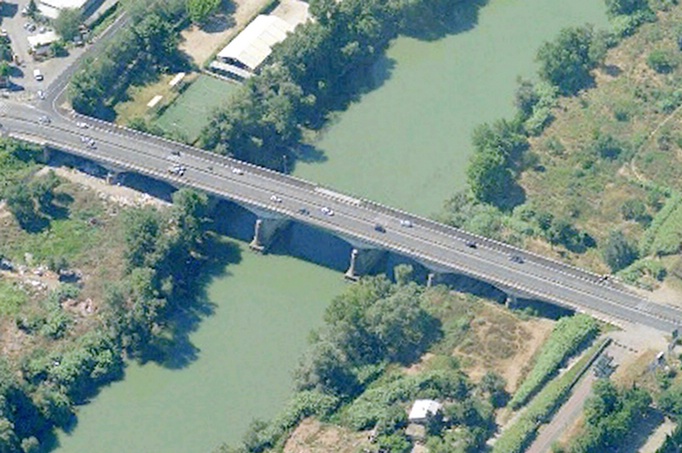
The MODERN PONTE SALARIO was built in 1870 with an expansion in 1930
The structure of the end of the second/first half of the century BC there are only two minor arches incorporated into the modern bridge. They are in cement with shards of tuff, while the outer blocks are made of tuff stone from Fidene

Thursday, December 28, 2017

GARIBALDI BRIDGE

PONTE GARIBALDI
1884/88 Angelo Vescovali (1826/95)
The original two-bay bridge in metal, resting on a central pylon and two shoulders covered with travertine, was enlarged and rebuilt in concrete in the years 1955/57 by the engineer and mathematician from Trieste Giulio Krall (1901/71)
It is 120.40 m (395 feet) long
The first name was PONTE ALLA REGOLA (Bridge of the Regola district) but it was later dedicated to Giuseppe Garibaldi (1807/22) of whom are mentioned eight battles he won in the markings on the “Four Pillars” on the ends of the bridge

Tuesday, December 26, 2017

MAGLIANA BRIDGE

PONTE DELLA MAGLIANA
1930/48 designed by Romolo Raffaelli
It was swept away by a flood of the Tiber in 1937 when it still had not been completed
Bombed and damaged in 1943 by the Germans during the Battle of Magliana
Bombed and destroyed by the Americans in 1944
Rebuilt in 1948 200 m away by Ignazio Guidi (1904/78), Cesare Valle (1902/2000) and Carlo Cestelli Guidi for the Allegri firm without the previous fascist decorations
It is 224 m long (735 feet) and is made up of seven arches in reinforced concrete and travertine. The central bay can be opened and it is made of steel

Monday, December 25, 2017

BRIDGE OF THE RESURGENCE

PONTE DEL RISORGIMENTO
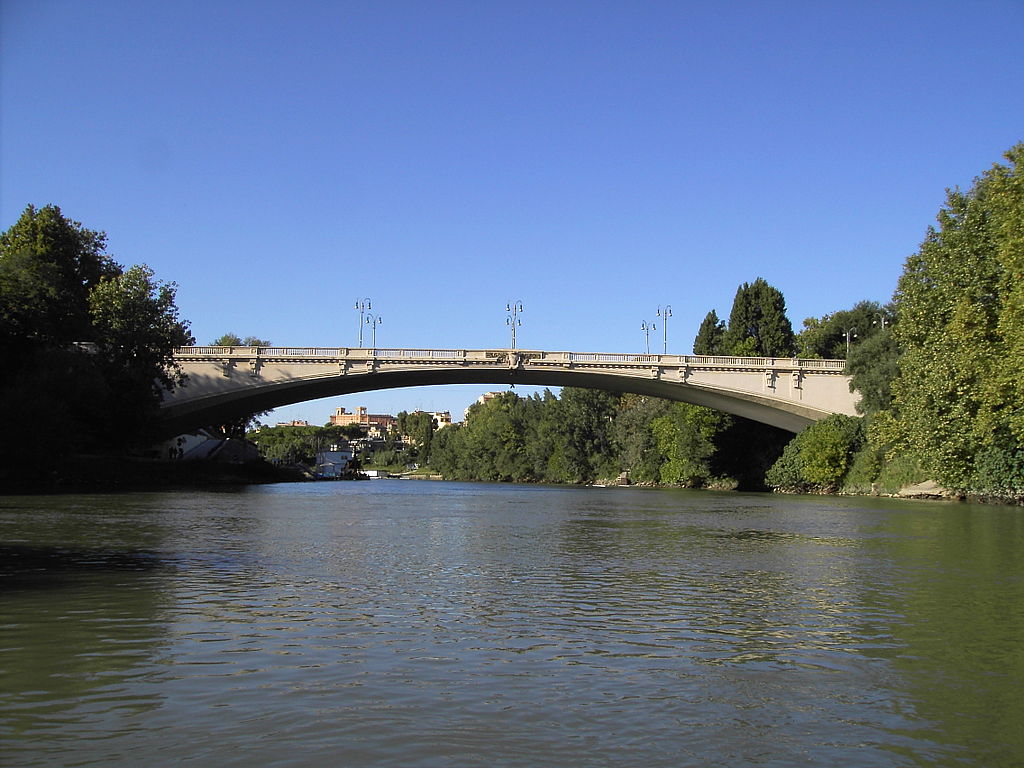
1909/11 by the great French inventor and engineer François Hennebique (1842/1921)
“He first developed his reinforced concrete system on a house project in Belgium in 1879 where he used concrete as a fireproof protection for wrought iron beams. In 1894, Hennebique built the first reinforced concrete bridge in Wiggen, Switzerland. His business developed rapidly, expanding from five employees in Brussels in 1896, to twenty-five two years later when he moved to Paris. In addition, he had a rapidly expanding network of firms acting as agents for his system. Hennebique's idea of strengthening concrete using iron and steel bars was the forerunner to the widespread modern reinforced-concrete method used in construction today” (National Inventors Hall of Fame - www.invent.org)
The span of the bridge is 100 m (330 feet) and the thickness at the center is only 85 cm (2.7 feet)
It was built on the occasion of the fiftieth anniversary of the unification of Italy to link the areas set up for the international exhibition of Valle Giulia and the Prati district
It was the first bridge to be built in Rome with reinforced concrete and a single arch
It was later covered with stucco in imitation of travertine and so the structures of advanced technology with which it was built were hidden
“For its technical characteristics is one of the most significant works produced in the world in those years. (...) Some innovative solutions were adopted because of the limited capacity of resistance of the ground which advised both the use of a 'cell' structure - formed by a series of ribs orthogonal among themselves - rigid but very lightweight and thus able to greatly reduce the loads, both the testing of new techniques for the construction of the foundations themselves” (Piero Ostilio Rossi)