Showing posts with label Churches of Rome. Show all posts

Saturday, December 28, 2019

Sts. CELSUS AND JULIAN

SS. CELSO E GIULIANO
Vicolo del Curato 12

Consecrated, according to tradition, by Celestine I (422/432) in the year 432 and dedicated to the two martyrs of the fourth century from Antioch

It is mentioned in the sources in 1008 as Ecclesia Sancti Celsi

It was rebuilt in the years 1509/35 to a design by Donato Bramante (1444/1514), which however, was not carried out entirely

Rebuilt again in the years 1733/43 by Carlo De Dominicis (1696/1758) for Clement XII Corsini (1730/40)

“There is no doubt that the masterpiece of De Dominicis is the church of Sts. Celso and Giuliano (...). Taking advantage of the opportunity to design a completely new structure, De Dominicis devised a transverse oval, with seven radiating chapels. The plan is only superficially similar to the transverse oval used three quarters of a century before by Bernini in S. Andrea al Quirinale: De Dominicis, increasing the size of the chapels corresponding to the transverse axis and the longitudinal or ritual axis, deliberately accentuates both these axises, resulting in a blend of oval plan and elongated Greek cross in a way similar to that often implemented by the architects of the late sixteenth century. On the other hand, the conservatism of the spacial concept is mostly displaced by the dynamic sensitivity of the tectonic structure and the happiness of ornamentation applied” (John Varriano - Dizionario Biografico degli Italiani Treccani)

Restored 1868 by Andrea Busiri Vici (1818/1911)

1st CHAPEL ON THE RIGHT
Marble urn of the eighteenth century with the relics of Sts. Artemisia and Januaria
Above the altar “S. Cornelius Pope among Sts. Artemisia and Januaria” 1737 by Giuseppe Lapis

2nd CHAPEL ON THE RIGHT
Above the altar “Mary Magdalene” 1736 by Emanuele Alfani (active 1736/74)

3rd CHAPEL ON THE RIGHT
Above the altar “Wooden crucifix” first half of the fifteenth century of the school of Lucca
Altar piece “Lady of Sorrows” of the eighteenth-century

MAIN ALTAR
“Christ in glory and Sts. Celsus, Julian, Marconilla (mother of Celsus) and Basilissa (wife of Julian)” 1736/38 one of the first Roman works by Pompeo Batoni (1708/87)
On the right “St. Celsus victorious over the pagan priests” 1735 by Francesco Caccianiga (1700/81)
On the left “St. Julian resurrecting the dead” 1736 by Giacomo Triga (1674/1746), a pupil of Benedetto Luti

3rd CHAPEL ON THE LEFT
Decoration of the nineteenth-century in neo-Renaissance style
Above the altar “Our Lady of the Graces” copy of the end of the sixteenth century of a medieval painting

2nd CHAPEL ON THE LEFT
Above the altar “Bishop Liborio” 1736 by Giuseppe Valeriano (1542/96)

1st CHAPEL ON THE LEFT
Above the altar “Baptism of Christ” 1736/37 by Giuseppe Ranucci
This was the baptistery chapel until 1930 and a plaque commemorates the baptism which took place here of Eugenio Pacelli later to become Pope Pius XII (1939/58)

Friday, December 27, 2019

Sts. ANTHONY OF PADUA AND ANNIBALE MARIA

SS. ANTONIO DA PADOVA EANNIBALE MARIA
Piazza Asti 10

1965 Raffaele Boccuni

The BELL TOWER is 47 m (154 feet) high
It is one of the highest in Rome
S. Annibale Maria di Francia (1851/1927) was the founder of the Congregations of the Rogationists of the Heart of Jesus and of the Daughters of Divine Zeal. He was born and died in Messina, Sicily

Tuesday, December 24, 2019

St. THOMAS MORE

S. TOMMASO MORO
Via dei Marruccini 1

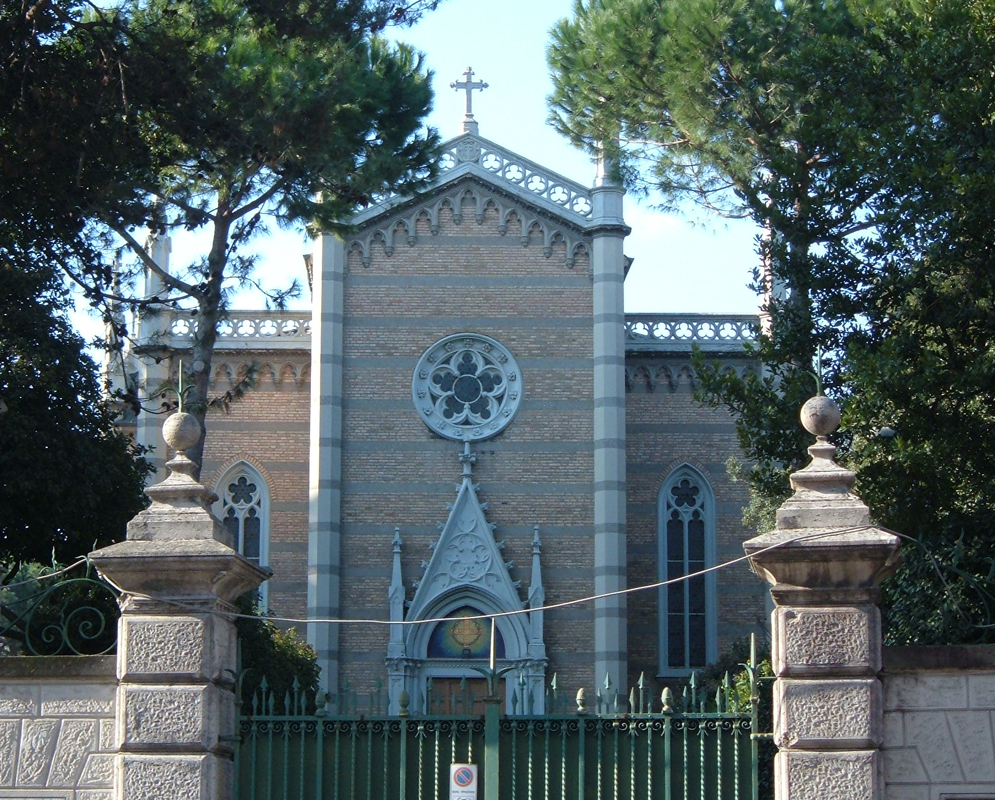
 1921/26 Giuseppe Gualandi (1866/1945) in Gothic Revival style

The original name was S. MARIA AUSILIATRICE DEL PURGATORIO (St. Mary Helper of the Purgatory) and it was dedicated to Sir Thomas More in 1974
Thomas More (1478/1535) was a lawyer, humanist and statesman. He rebelled against the Protestant Reformation and Henry VIII and he was beheaded for his rebellion

Monday, December 23, 2019

St. TERESA OF ÀVILA

S. TERESA D'AVILA
Corso d'Italia 37

1901/02 Tullio Passarelli (1869/1941)
Next door there is the General Curia of the Discalced Carmelites
It was built in Romanesque Revival style

In the FAÇADE
“Two marble lions” by Armando Brasini (1879/1965)

In the BRONZE PORTAL
Reliefs “Stories of St. Teresa” 1983 by Fra 'Serafino Melchiorre
“Statue of St. Teresa” by Giuseppe Trabacchi (1839/1909)

Sunday, December 15, 2019

St. SAVIOUR IN WAVE

S. SALVATORE IN ONDA
Via dei Pettinari 51

Mentioned for the first time by the sources in 1127
It was originally dedicated to S. Salvatore and S. Cesareo (St. Saviour and St. Cesareus)
The official name is Chiesa della Trasfigurazione di Nostro Signore Gesù Cristo (Church of the Transfiguration of Our Lord Jesus Christ)
Maybe it was called S. Salvatore in Onda for the frequent floods of the nearby river or for a now lost old painting which used to be visible in the church with “Saviour walking on water”

In 1445 it was given to the Franciscans who remained here for about 400 years

In the adjacent CONVENT Francesco Della Rovere lived before he became Pope Sixtus IV (1471/84) and also Felice Peretti before becoming Pope Sixtus V (1585/90)

In 1684 it was restored and reduced in size

Restored again in the years 1725/29 for Benedict XIII Orsini (1724/30) and in 1845 for St. Vincent Pallotti (1795/1850) to whom the church had been entrusted as the seat of the Congregazione dell'Apostolato Cattolico (Congregation of the Catholic Apostolate) founded by him in 1835

“After the tornado of the French Revolution and Napoleon, bishops, priests, clergy, scholars, acted generously in defense of the faith. And Vincent Pallotti saw and appreciated that. But he said that it was not enough: the real problem was not to protect the fence of the believers. No, at that time one had to conquer other believers still, everywhere, knocking down fences. He added: this is the task of all, because every Christian has the duty to keep the faith and to spread it where there is no more faith or not yet. This was a program of attack. Vincenzo respected the apostolic mandate peculiar to the Pope, bishops, clergy, but then spoke of 'Catholic apostolate' as a duty and responsibility for every Christian, because 'God has commanded everyone to help getting eternal salvation for his neighbor' (...) Pius XI proclaimed Vincent 'real worker of the missions', 'provident and valuable collaborator and forerunner of the Azione Cattolica (Catholic Action)'. Pope John XXIII proclaimed him a saint in 1963” (Domenico Agasso - Famiglia Cristiana - www.santiebeati.it)

It is currently officiated by the Pallottines Missionaries

FAÇADE 1845

INTERIOR
1877/78 Luca Carimini (1830/90) who restored the church, revealing the “Twelve ancient columns”, and raised the level of the floor

CEILING 1876

CLERESTORY
Entablature also in the apse with faux gold mosaic representing on the right “Symbols of the Old Testament” and on the left “Tools of martyrdom and symbols of the Evangelists” maybe by Alessandro Palombi (active late nineteenth/early twentieth century)

Alternating in between the windows “Characters of the Old Testament” by Filippo Prosperi (1831/1913) a pupil of Cesare Mariani

IN THE RIGHT NAVE - CHAPEL OF THE VIRGO POTENS
1863 Luca Carimini
On the altar “Virgo Potens” (Powerful Virgin Mary) of the end of the eighteenth century. It belonged to the Blessed Elisabetta Sanna who is buried here

Canvases “Immaculate Conception”, “St. Francis or Bonaventure”, “St. Anthony of Padua”, “Annunciation”, “Judith and Holofernes” and “Esther and Ahasuerus” 1875/76 by ​​Cesare Mariani (1826/1901)

WALL AT THE END OF THE RIGHT NAVE - ALTAR OF Sts. JOSEPH, COSMAS AND DAMIAN
“Apparition of St. Joseph and Christ Child to Sts. Cosmas and Damian” by Massimiliano Seitz

MAIN ALTAR
1950 by Luigi Fracassini with, inside, the body of St. Vincent Pallotti
“Virgin Mary and Child” 1878 by Cesare Mariani

APSE
In the apsidal basin “Transfiguration” by Filippo Prosperi
Wall of the apse “Sts. Peter, Paul, John of Nepomuk and Filippo Neri” by Cesare Mariani

WALL AT THE END OF THE LEFT NAVE - ALTAR OF St. ALEXIS
Marble relief “Apparition of the Virgin Mary to Sts. Alexis and Euphemian” late 1700s by an anonymous eighteenth-century artist

CONVENT OF THE PALLOTTINES
Museum on the first floor and rooms where St. Vincent Pallotti lived

ARCHAEOLOGICAL EXPLORATIONS
Under the apse there is the CRYPT with three small naves
In the level further below there are ruins of ancient Roman storage rooms and shops of the second century AD. They are accessible from the crypt through a trap door

Sunday, September 1, 2019

St. PASSERA

S. PASSERA
Via S. Passera 1 - Magliana

Probably built in the fifth century AD on the ruins of a ROMAN MAUSOLEUM of the late second/early third century AD, still visible

The church is mentioned in the sources for the first time in the eighth century

The present church dates back to the thirteenth century

Here were kept the relics of the martyrs Sts. Cyrus and John, brought to Rome in the year 407. They were two doctors from Alexandria in Egypt killed during the persecution of Diocletian (284/305), which took place in the year 303

The Catholic Church does not include any S. Passera in the lists of saints and, according to historical sources, no saint has ever existed under the name Passera

The curious name Passera (sparrow) is mentioned in the sources only since 1317 and it comes maybe from a contraction of S. Prassede (St. Praxedes), the saint to whom the church was originally dedicated, and of whom a relic was preserved here

The name could also come from the phonetic corruption of the title Abbas Cyrus (father Cyrus), from which S. Abbaciro, given to the church

Over the centuries the term underwent a distortion in the popular language, becoming Appacero, Pacero, Pacera and, finally, Passera

APSE

Two orders of frescoes of the fourteenth century:

In the upper part “Jesus and Sts. Peter, Paul and John the Evangelist”

In the lower part “Virgin Mary and Child with Sts. Praxedes, Cyrus and John martyr with two images of laymen, probably the patrons”

ARCHAEOLOGICAL EXPLORATIONS

The underground of the church, buried after 1706, was rediscovered only in 1904

On the north wall there are some faded frescoes “Cycle of Goddess Dike” with the goddess holding a pair of scales, a bird and a boxer

On the south wall “Sheep and red lines”

In the vault “Large six-pointed and eight-pointed star and decorative motifs”

There are some unrecognizable images in the counter façade
At the end of the thirteenth century a “Virgin Mary and Child” was painted here, but it was stolen in 1968

Sunday, July 14, 2019

St. NICHOLAS IN PRISON

S. NICOLA IN CARCERE
Maybe built in the seventh century. Mentioned in the sources for the first time in the ninth century
Renovated in 1128 at the time of Honorius II (1124/30) as evidenced by the plaque at the top of the right nave. Dating back to the same period are the frescoes with “Baptism of Christ”, “Prophets” and “Decorative motifs with plants and animals” detached in 1853 and now in the Vatican Museums
Restored in 1733 with the remake of roof and floor and with the construction of the sacristy
Restored in the years 1846/65 with a new restoration of the roof and the opening of four windows on each side of the nave and two in the transept
It was isolated from adjacent buildings in 1932
The church's name probably derives from an early medieval prison not existing anymore that had to be nearby
On every 6th of December, on the occasion of the feast of St. Nicholas, here the loaves of bread of St. Nicholas were donated to the faithful
Regional Church of Puglia and Lucania regions

FAÇADE
1599 Giacomo Della Porta (1533/1602) for Cardinal Pietro Aldobrandini, restored in 1733, and finally in 1808 by Giuseppe Valadier (1762/1839)
In the reliefs “Eight-pointed stars” symbol of the Aldobrandini family. On the right “Martyrs Mark and Marcellianus”, on the left “St. Nicholas”

BELL TOWER
Probable rest of the fortifications of the Pierleoni family, with bells cast in 1286 by Guidotto Pisano

MAIN NAVE
Ten panels with “Stories of St. Nicholas” 1865/66 by Guido Guidi (1867/1911)
“This was Guido Guidi's first public commission. He was a minor exponent of the Eclectic Roman group of artists lead by Francesco Podesti and Pietro Gagliardi, after the teachings of Purism by Tommaso Minardi” (Angela Catalano)

BEGINNING OF THE RIGHT NAVE
Copy of the “Holy Trinity” by Guercino (in S. Maria della Vittoria) by Constantino Brumidi (1805/80) who maybe also executed the copy of the “Assumption of the Virgin Mary” by Annibale Carracci from the original (in S. Maria del Popolo) in the chapel of the left nave
Constantino Brumidi eventually ended up in Washington where he painted the Capitol for twenty five years

ON THE WALL OF THE RIGHT NAVE
Painting “Madonna and Child” about 1470 by Antonio Aquili aka Antoniazzo Romano (about 1435-40/1508). Some date it to 1486, when an altar was consecrated in the left nave, where perhaps it was originally placed

RIGHT TRANSEPT
“Tomb of Cardinal G.B. Rezzonico” nephew of Clement XIII Rezzonico (1758/69) by the Irish Christopher Hewetson (about 1739/1797)

AT THE END OF THE RIGHT TRANSEPT - CHAPEL OF THE ROSARY
Frescoes inspired by the Eucharist by Giovanni Baglione (1566/1643), the only remnant of the paintings that were in the church at the end of the sixteenth century

APSE
On the basin “Glorification of Christ between the Virgin Mary and St. Nicholas with Triumphant Church in heaven and with Militant Church on earth”, on the hemicycle in the bottom part “St. Nicholas at the Council of Nicaea in 325 hurls anathemas against Arius” by Vincenzo Pasqualoni (1819/80) a pupil of Tommaso Minardi, like Guido Guidi
Painting “St. Nicholas between angels and the three children he resurrected” by an anonymous eighteenth-century artist

MAIN ALTAR
“Urn in green porphyry” about IV/V d.C. from the crypt
“Four angels in bronze holding the altar” by Antonio Della Bitta (1807/about 1879) who also sculpted the famous statue of Neptune in the homonymous fountain that decorates the north of Piazza Navona

TRIUMPHANT ARCH
On the sides “Angels with the symbols of the episcopate and of St. Nicholas” by Guido Guidi

LEFT TRANSEPT
Above the altar “Ascension of Jesus” 1505/06 by Lorenzo Costa (1460/1535)
Lorenzo Costa was one of the most important artists of the schools of Ferrara and Mantua in the sixteenth century. The work was painted for the church of S. Maria Mascarella in Bologna and it was badly cut to fit this altar

CHAPEL IN THE LEFT TRANSEPT - CHAPEL OF THE CROSS
On the altar “Wooden crucifix painted” of the sixteenth century
On the left wall painting “St. Nicholas between Christ and the Virgin Mary” by an unknown nineteenth-century artist

LEFT NAVE - CHAPEL OF OUR LADY OF GUADALUPE
On the altar “Our Lady of Guadalupe” by an anonymous artist, brought from Mexico in 1773 by Jesuit missionaries
Frescoes with “Angels”, “Prophets”, “Annunciation” and “Coronation of the Virgin Mary” 1862 by Luigi Martinori (1828/95)
On the left copy of the “Assumption of the Virgin Mary” maybe by Constantino Brumidi from the original by Annibale Carracci in S. Maria del Popolo
On the right “Annunciation” by an unknown seventeenth-century artist of Tuscan culture

SACRISTY
In the entrance canvas “Immaculate Conception” maybe by Guido Guidi (1867/1911)
“Eighteenth-century wooden crucifix”
Copy painted in 1850 of the “Ecstasy of St. Francis” by Domenichino from the original in the church of St. Mary of the Immaculate Conception

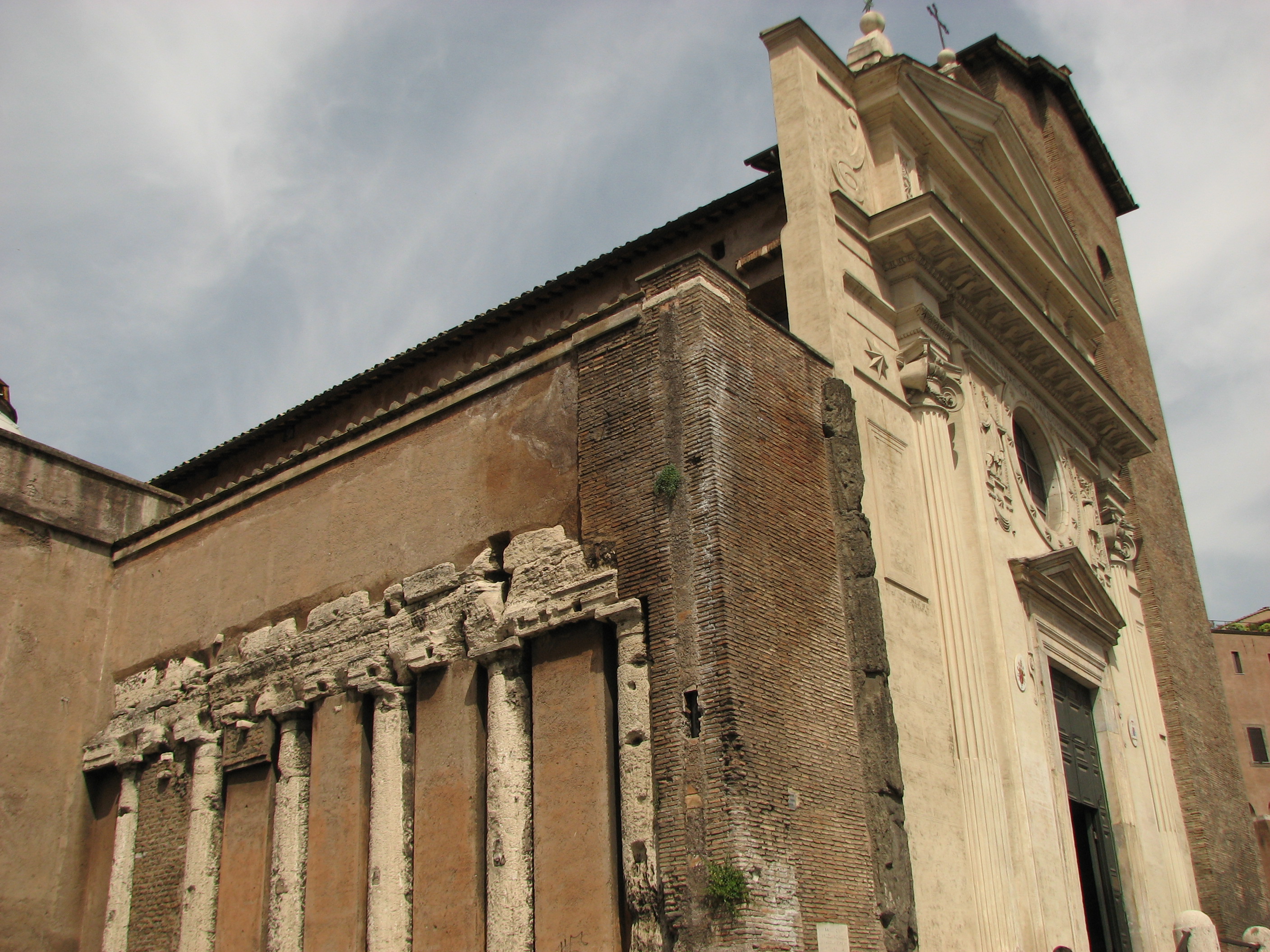
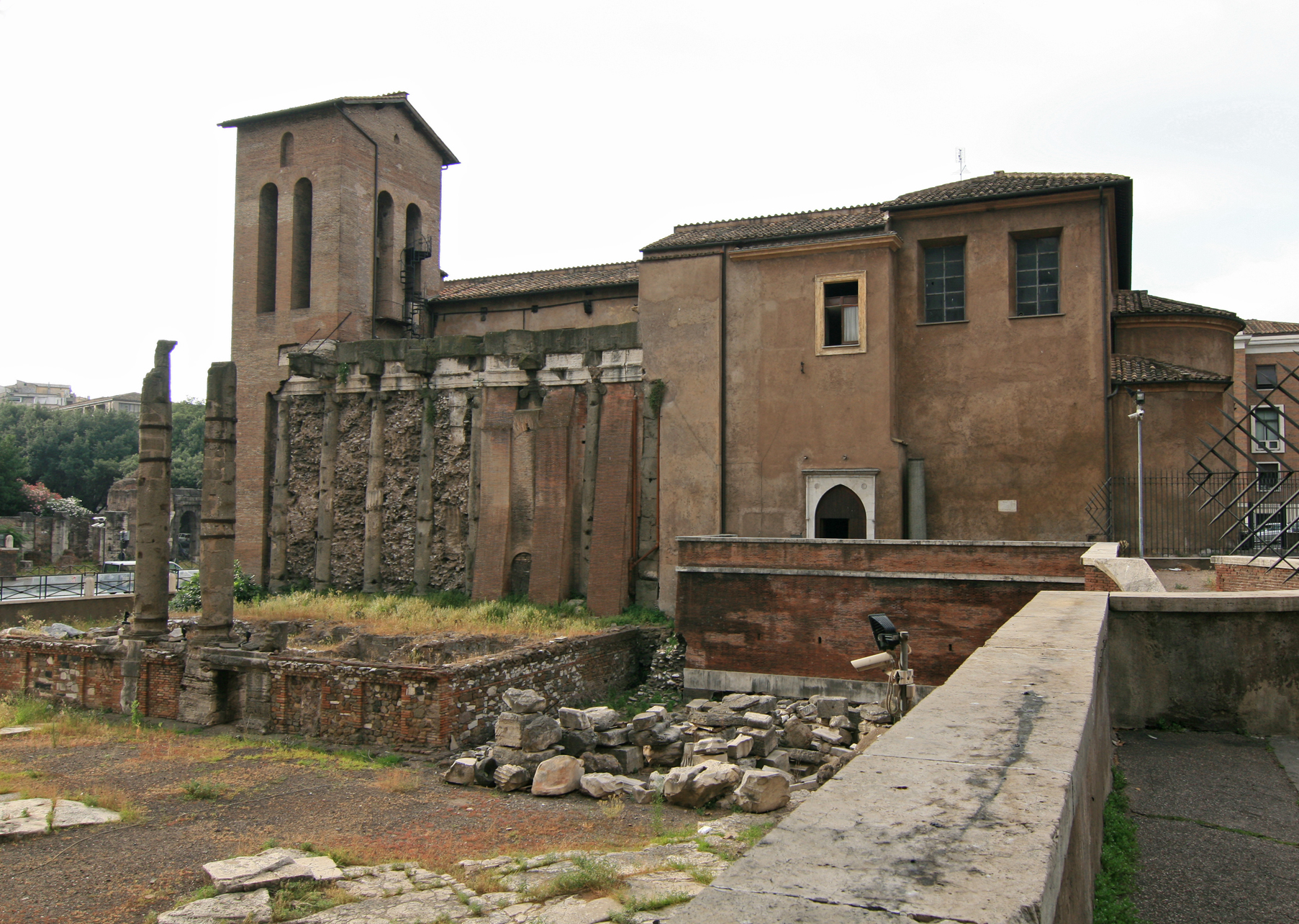
Three Temples under St. Nicholas in Prison

To the right of the church
TEMPLE OF JANUS (maybe) 
264/241 BC Caius Duilius during the First Punic War 
Restored in the year 17 AD by Tiberius (14/37) 
Peripterus hexastyle sine postico (columns all around, six columns in the front, non in the back) with eight columns remaining on the right side and two in front

Under the church
197 BC, the current structure dates back to 90 BC built for one Cecilia Metella 
Peripterus hexastyle in Ionic style

To the left of the church
TEMPLE OF HOPE (maybe) 
260 BC Atilius Calatinus
Peripterus hexastyle with six Doric columns on the left side. Originally on each side there were eleven columns

Monday, April 8, 2019

St. MARY DOOR OF HEAVEN

S. MARIA PORTA PARADISI
1523/26 and 1537/43 Antonio Cordini aka Antonio da Sangallo the Younger (1483/1546)
Sangallo built it adjoining the Ospedale S. Giacomo degli Incurabili (Hospital of St. James of the Incurables) that he was expanding in that same period, due to the legacy of the Spanish priest Antonio de Burgos who had died in 1523
1645 top part of the FAÇADE, modernization and restoration of the church by Giovanni Antonio De Rossi (1616/95)
On the façade “Madonna and Child” 1509 by Andrea Contucci aka Andrea Sansovino (1460/1529)

INTERIOR
1645 by Giovanni Antonio De Rossi

DOME
Frescoes in the ribs “Assumption of the Virgin Mary with angels musicians”, in the seven lunettes “Stories of St. James”, in the eight round medallions “Virtues” by Pietro Paolo Ubaldini (about 1614/about 1684) a pupil of Pietro da Cortona
Stuccos with “Marian Symbols” by Giovanni Maria Surruti and Pietro Nosedi

TO THE RIGHT OF THE ENTRANCE
“Meeting with St. Anne” 1662 by Lorenzo Greuter (1620/68)

RIGHT CHAPEL
Marble altarpiece “Madonna, St. Anne, St. John the Baptist and Jesus” by Domenico De Rossi (1659/1703)

TO RIGHT OF THE ALTAR
In the upper part “Tomb of the physician Matteo Caccia” 1645 by Cosimo Fancelli (1620/88)
Higher still, fresco “Annunciation” 1662 by Lorenzo Greuter

MAIN ALTAR
Fifteenth-century altar picture “Virgin Mary and Child” set in a spectacular composition in marble and stucco with “Glory of Angels, St. Joseph and St. Anthony” about 1685 by Francesco Brunetti
At the sides “Birth of the Virgin Mary” and “Presentation of Mary in the Temple” 1659 by Lorenzo Greuter

TO THE LEFT OF THE ALTAR
In the upper part “Tomb of Antonio de Burgos” patron of the church, 1526/34, designed by Baldassare Peruzzi (1481/1536) and executed by an aide
Higher still, fresco “Death of the Virgin Mary” 1662 by Lorenzo Greuter

CHAPEL ON THE LEFT
High relief “Sts, James and John presented to Jesus by their mother Mary Salome” 1645 by Cosimo Fancelli

TO THE LEFT OF THE ENTRANCE
“Rest on the Flight into Egypt” 1662 by Lorenzo Greuter
It appears that in the church worked at the stuccos also Pietro Paolo Naldini (1619/91), whose almost homonymy, as well as the contemporary period, with the painter Pietro Paolo Ubaldini has generated some confusion among scholars

SACRISTY
Canvas “St. James and sick in adoration of the Virgin of the Miracle” by Bernardino Gagliardi (1609/1660) with an antique frame

Tuesday, April 2, 2019

St. MARY IN TRIVIO

S. MARIA IN TRIVIO
Built in the first half of the sixth century by Belisarius, the general of the Byzantine Emperor Justinian (527/565), to make amends for the deposition of Pope Silverio (536/537), after having freed Rome by the Goths in the year 537 during the Greek-Gothic war (535/553)
This piece of news is reported on a plaque of the twelfth century on the outside of the church
Rebuilt in the eleventh century and again in the years 1573/75 by Jacopo Del Duca (about 1520/1604), assistant of Michelangelo Buonarroti, who also designed the FAÇADE
Formerly known as S. Maria in Xenodochio or S. Maria in Sinodo. The current name was introduced in the fourteenth century
It is now entrusted to the Congregation of the Missionaries of the Precious Blood

Spectacular paintings “Circumcision”, “Presentation in the Temple” and “Assumption”
Frescoes in the spandrels “Life of the Virgin Mary”
In the lunettes “Angels”
In the triumphal arch stucco relief “Triumph of the Cross” all masterpieces of the years 1669/70 the great painter from Rieti Antonio Gherardi (1638/1702), probably helped for the lunettes by Giacinto Calandrucci (1646/1707)
“Within a deliberately archaic compositional scheme, Gherardi gives life, through many cultural references, to a complex pictorial synthesis in which he mixes the Lombard culture, in particular echoes the art of Michelangelo Merisi da Caravaggio filtered through the interpretation of Mattia Preti, the art of the early masters, Pier Francesco Mola and Pietro da Cortona, the study of the great Venetian painting style of the sixteenth and the Bolognese one of the seventeenth century; to this he added his interest for the work of Giuseppe Coli and Filippo Gherardi, pupils of Pietro da Cortona and responsible, in 1665, for the decoration of the ceiling of the library of S. Giorgio Maggiore in Venice” (Ivana Corsetti - Dizionario Biografico degli Italiani Treccani)
2nd ARCH ON THE RIGHT - ALTAR OF OUR LADY OF THE MOST PRECIOUS BLOOD AND OF THE MISSIONS
In the arch seven small paintings “Tales of Christ and of the Virgin Mary” by Giovanni Francesco Grimaldi (1606/80) from Bologna

3rd ARCH ON THE RIGHT - ALTAR OF THE CRUCIFIX
“Painted wooden Crucifix” Venetian work of the sixteenth century
In the arch five small paintings “Scenes of the Passion of Christ” by Giovanni Francesco Grimaldi

4th ARCH ON THE RIGHT
On the altar “Crucifixion with the Virgin Mary, Sts. John and Mary Magdalene” by Giovanni Francesco Grimaldi

“Virgin Mary and Child” first half of the fifteenth century by an unknown artist maybe from Umbria or Marche

SIDE DOORS OF THE PRESBYTERY
Frescoes on the right “Pope St. Liberius (352/366)” and on the left “St. Cletus (76/88)” the legendary third pope after St. Peter and St. Linus

4th ARCH ON THE LEFT
Above the altar “Martyrdom of St. Cletus” end of the sixteenth century by the Capuchin friar Paolo Piazza aka Cosimo Piazza

3rd ARCH ON THE LEFT - ALTAR OF St. GASPAR DEL BUFALO
Above the altar “St. Gaspar in glory” 1939 by Guido Francisi (1886/1945)
Under the altar urn with the relics of St. Gaspar del Bufalo
“Gilded bronze statue of St. Gaspar del Bufalo” 1954 by Aurelio Mistruzzi

2nd ARCH ON THE LEFT
Above the altar “St. Mary Magdalene receives communion from the angel” 1672 by Luigi Scaramuccia (1616/80) from Perugia

ANTI-CHAMBER OF THE SACRISTY
“S. Camillo heals a sick member of the Crescenzi family” by Antonio Gherardi

GARDEN
Tree under which S. Filippo Neri loved to retire in prayer

Monday, March 25, 2019

St. MARY IN COSMEDIN

S. MARIA IN COSMEDIN
Sixth century AD over the ARA MAXIMA OF HERCULES (Hercules' High Altar) an extremely ancient temple, rebuilt in the second century BC
Enlarged in 782 by Adrian I (772/795) and called Kosmidion (adorned) for the beautiful decorations: to make building material for the extension, a large marble temple, which used to be behind the church, was burned for an entire year
Restored in about 860 by Nicholas I (858/867), who also built the adjacent building known as the PALACE OF NICHOLAS I which he used occasionally as his dwelling
“He built it as a large and spacious house where, when necessary, the popes could take refuge and settle comfortably with their families. He fortified it and supplied it with ramparts and with a ring of walls and battlements. It was built over previous constructions by Hadrian and over the Ara Massima” (Giuseppe Massimi)
Restored further in about 1119 by Gelasius II (1118/19), who raised up to two meters the floor level, and in 1123 by Callistus II (1119/24) who consecrated it and transformed the Palace of Nicholas I in PALAZZO DIACONALE (Diaconate Palace). It was later changed profoundly and it is currently known as PALAZZO DELLA PANTANELLA
In 1719 the FAÇADE of the church was rebuilt by Giuseppe Sardi (1680/1753)
In the years 1893/99 it was restored to the Romanesque style by G.B. Giovenale (1849/1934)
It is officiated with the Greek-Melkite Rite

Twelfth century. Bell dating back to 1289 still working

PORTICO
“Monument of the prelate Alfano” about 1120, camerarius (assistant of the pope and administrator of the church's assets) of Callistus II, perhaps the promoter of the renewed Roman classicism of the early twelfth century
In an ARCH there are traces of paintings with “Annunciation” and “Nativity” of the fifteenth century
Opposite the main door two fragments of a jaw of a large toothed whale are hung, maybe a sperm whale
“Nothing can be said for sure about their provenance. They are well preserved and not fossilized. It will not be out of place to mention here that close by there was the large inland port of the Emporium and the Forum Piscatorium (fish market), and that in the latter, precisely in the walls of the church of S. Angelo in Pescheria, is still stuck a Roman tombstone which reads in Latin: 'The heads of fish longer than this marble are given to the Conservatives until the wee fins'. Will there be any relation between these facts and the bones?” (Giuseppe Massimi)
Famous “Mouth of Truth” placed here in 1632
It weighs about 1,300 kg (1.4 tons)
It is a marble manhole cover of the classical age representing the face maybe of a river god or of Okéanos (ocean). It is connected to the famous legend according to which the hand would be cut to the liars who would introduce it into the slot representing the mouth
Recently it has been convincingly suggested that this famous manhole cover was originally placed in the center of the floor of the Pantheon. Others believe it comes from the nearby Temple of Hercules Victor or Olivarius

BARBARIC PORTAL
Maybe of the ninth century with sculptures “Evangelists and decoration with plants and animals” signed by Johannes de Venetia

Eighth century in opus sectile (inlaid marble), one of the best preserved in all of Rome

Remains of frescos of the centuries VIII, IX and XII
“The cycle of the twelfth century overlaps a previous decoration, comprising heads of prophets within medallions, which appear also on the right wall, dated by G.B. Giovanale at the time of Nicholas I (858/867). Hélène Toubert, in her fundamental study of the early Christian revival in Roman painting of the twelfth century, judged the cycle of S. Maria in Cosmedin as the most extraordinary demonstration of the ability of Roman workshops to borrow from the classical repertoire: this is revealed especially in the compositional idea that unifies the levels and the individual stories in an ornamental texture of an absolutely antique flavor” (Serena Romano)
“Ten columns” of the Flavian period (69/96) inserted into the central and left naves, believed to have belonged to the Statio Annonae (the seat of the prefect), but more likely to a SHRINE IN CONNECTION WITH THE ALTAR OF HERCULES

ALTAR TO THE LEFT 
In a glass case is visible a “Skull attributed to St. Valentine”, a Roman priest, who was martyred in Rome, not to be confused with the patron saint of lovers, who lived during the same period and whose relics are kept in the city of Terni 
In the church there are plenty of other bones believed to be relics of saints

1294 by Deodato Cosma the Younger, signed Deodatus me fecit on the left side of the base of the front pediment
1123 in red granite
CHAIR
Dedication to the Virgin Mary, engraved for camerarius Alfano
Frescoes of the eleventh century, much restored

CHAPEL OF THE CHOIR ON THE RIGHT
1687 Tommaso Mattei
“Madonna and Child” fifteenth century, known as Theotókos (Mother of God), much restored

SACRISTY
“Epiphany” one of the fragments of mosaic with gold background of about 705 from the destroyed chapel of Pope John VII (705/707)
The Chapel of John VII was also known as Oratory of the Virgin Mary and it used to be in the right part of the ancient Basilica of St. Peter, near the entrance
This is the best preserved fragment. The others are in the Vatican Grottoes, in the church of S. Marco in Florence and in the Duomo of Orte
“It survives in it all the finesse and excellence of Roman art from the best times of the empire. This finesse and excellence survived the centuries and ignoring the rigidity of Byzantine forms, in the heydays of that stiff style, it gave us this masterpiece” (G.B. Giovenale)

Thursday, March 14, 2019

St. MARY OF LORETO

S. MARIA DI LORETO
Begun in 1507 according to a project maybe by Donato Bramante (1444/1514) and immediately interrupted
Continued since 1522 by Antonio Cordini aka Antonio da Sangallo the Younger (1483/1546) and consecrated in 1534 with a temporary roof
It was built for the Guild of Bakers founded in 1507 at the behest of Pope Julius II Della Rovere (1503/13)
It is still the Roman Church of the Bakers
FAÇADE finished in the years 1550/52
Completion of the SIDES, DOME and BELL TOWER 1573/76 by Jacopo Del Duca (about 1520/1604)
“The drum and the dome are one of the major achievements of late fifteen hundreds architecture in Rome. In this work the architect inverts the correlation between base and dome, bringing the latter to emerge from the former: the base has therefore become then element generating shapes and its architectural frames lead the eye in a path from the bottom to the top. The ascending character of the vision is reinforced by the decorative elements until the radial explosion of the lantern described by the neoclassical critic Francesco Milizia as a 'cage of crickets'. With the small bizarre bell tower the architect processes in a mannerist sense the precepts of Michelangelo, his great master, creating an architectural mechanism free and of high quality” (Luigi Gallo)
Restructuring and sacristy 1638/40 by Gaspare De Vecchi (active 1628/1643)
Restoration 1867/75 by Luca Carimini (1830/90)
Frescoes in the DRUM “Stories of Mary”, in the DOME “Prophets, sibyls, saints and angels” and in the COUNTER FAÇADE “Virgin Mary of Loreto carried by the angels” 1870/74 by Cesare Mariani (1826/1901)

Above the altar “St. Aloysius Gonzaga” by an unknown nineteenth-century artist
Mosaics “Dove of the Holy Spirit, cherubs, Sts. Catherine, Francis and John the Evangelist” 1594 by Paolo Rossetti (?/1621)

Above the altar “Virgin Mary of the Rosary with Sts. Dominic and Catherine” by an unknown nineteenth-century artist
Frescoes and paintings “Adoration of the Magi, saints, angels, Trinity and the commissioners” 1586 by Niccolò Circignani aka Pomarancio (about 1520/98)

1628/30 Gaspare De Vecchi, reworked by Luca Carimini
Painting on board “Virgin Mary of Loreto among Sts. Roch and Sebastian” maybe of the end of the fifteenth century by Marco Palmezzano (1459/1539)
At the sides of altar canvas: on the right “Death of the Virgin Mary” and on the left “Nativity of the Virgin Mary” 1630 by Giuseppe Cesari detto Cavalier d'Arpino (1568/1640)

SIX STATUES
From the right:
“Angel” 1630 by Stefano Maderno (1560/1636)
“St. Susanna” 1630/33 masterpiece by François Duquesnoy (1597/1643)
“In this most pure figure, the model of which was the ancient Capitoline statue of Urania, he reached with great delicacy of expression a wonderful blend of naturalness and the idea of antiquity” (Carlo Bertelli, Giuliano Briganti, Antonio Giuliano)
“He wished to portray not the individual fate of a saint, but the matter-of-factly condition of holiness. Consequently he represented this saint in a state of mental and physical rest instead of choosing a transitory moment as Bernini used to do. Duquesnoy gave shape to an ideal norm with the same compelling logic with which Bernini had featured a fleeting moment and a fluctuating event. Behind these two conflicting interpretations of saints are two different methods: the baroque and the classical, a subjective conception as opposed to an objective one, dynamic intensity opposed to rational discipline” (Rudolf Wittkower)
“St. Domitilla” about 1629 by Domenico De Rossi
It is the only one of the six statues represented while performing an emphatic gesture almost as if advancing
“St. Agnes” about 1630 by Pompeo Ferrucci (about 1566/1637)
“St. Cecilia” about 1633 by Giuliano Finelli (1602/53)
“Fruit of the anti-Bernini period of Finelli, this figure is rather more reminiscent of the feminine heroism of certain saints painted by Pietro da Cortona in that same period of time” (Alessandro Angelini)
Another beautiful “Angel” 1630 by Stefano Maderno

“Sixteenth-century wooden crucifix”
Frescoes with “Stories of Jesus and saints” 1870/74 by Cesare Mariani (1826/1901)
Above the altar “Our Lady of Sorrows” canvas by an unknown nineteenth-century artist

Above the altar “Charity of St. Charles Borromeo” and on the sides “St. Andrew” and “St. John the Baptist” by Filippo Tedeschi
On the piers stuccos with “Virtue, putti and a bishop with the model of the church” carved during the renovation of Gaspare De Vecchi in the years 1638/40
In the upper part canvas “St. Charles distributes communion to the plagued” 1664 by an unknown seventeenth-century artist

SACRISTY
Tombstones and paintings from various periods including:
“Sacred Heart of Jesus” 1796 by Pietro Tedeschi (1750/1805) from Pesaro
“Madonna and Child with Sts. Anthony, Catherine and Onuphrius” 1806 by Faustina Concioli